Category: freedom (Page 6 of 7)

Enough with browsers. We need cars now.

What we need, and don’t yet have:

For independence on the Net and the Web, we need cars, pickup trucks, bikes and motorcycles. Not just shopping carts — which are what browsers have become.

Personal vehicles give us independence. They let us drive and shop all over the place, coming and going as we please. In different stores we use the shopping carts provided for us; but we haul home what we buy in our own vehicles. We also meet sellers in stores at a human level, person-to-person. We can talk.

Even if we don’t own the vehicle we drive, we experience independence. Whether we drive a Ford, a Volkswagen or a Toyota, that car or pickup is ours. It is an extension of ourselves. We know in our bones, as drivers, that this is my engine, my doors, my tires. No company is saying “my” for you.

Cars, trucks, bikes and motorcycles are all substitutable goods. That’s why, if we’re competent drivers or riders, we can switch between them. It’s why we can bring what’s ours (our wallets and other personal things) with us in any variety of vehicles, without worrying about whether those personal things are compatible with a maker’s proprietary driving system.

And, because we are independent as drivers and riders, we are better able to relate to everybody and everything our vehicles enable us to reach and engage. Vehicles are, literally, tools of independence and engagement.

Nobody has invented a car for the Net or the Web yet. Browsers could have been cars, but .  That’s not the Net’s model, or the Web’s, either. It’s just what we’ve used for so long that we can hardly imagine anything else.

Think about how you feel on your bike, or in your car or truck. That’s what we want online. We don’t have it yet, so let’s invent it.

Some background

The was designed originally as a way to link documents by hypertext. Like the it still runs on, it was end-to-end. At the ends were documents and (presumably) readers.

The commercial Web of today is something else: a collection of sites. All are real estate: domains, literally. Each site doing business (and there are now a billion or more of those) has its own terms of engagement. Visitors can take or leave them. Either way, visitors’ freedom within each domain is entirely submissive in respect to the site owner.

This is an architectural fact of life on the commercial Web. It’s also why, should we wish to do business with the site owner, we meet an agreement that looks like this…

You agree that we aren’t liable for annoying interruptions caused by you; or a third party, buildings, hills, network congestion, rye whiskey falling sickness or unexpected acts of God or man, or of Elvis leaving the building. Unattended overseas submissions in saved mail hazard functions will be subject to bad weather or sneeze funneling through contractor reform blister pack truncation, or for the duration of the remaining unintended contractual subsequent lost or expired obligations, except in the state of Nevada at night. We also save harmless ourselves and close relatives from all we don’t control; including clear weather and acts of random gods. You also agree that we are not liable for missed garments, body parts, or voice mails, even if you have saved them. Nothing we say or mumble here is trustworthy or true, or meant for any purpose other than to feed the fears of our legal department, which has no other reason to live. Whether for reasons of drugs, hormones, gas or mood, we may change terminate this agreement with cheerful impunity, and notify you by means that neither of us will respect or remember.

☐   Accept.

… and click on the box.

“Agreements” like this are known in the legal trade as . According to  West’s Encyclopedia of American Law, this form “offers goods or services to consumers on essentially a ‘take it or leave it’ basis without giving consumers realistic opportunities to negotiate terms that would benefit their interests. When this occurs, the consumer cannot obtain the desired product or service unless he or she acquiesces to the form contract.” In other words, we acquiesce to these:
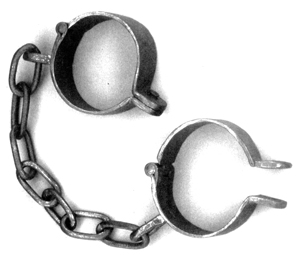
These contracts are called “adhesive” because they lock the submissive party to an agreement which the dominant party can change whenever it wants. In “Contracts of Adhesion—Some Thoughts about Freedom of Contract” (Columbia Law Review, July 1943), Friedrich Kessler explains how these contracts came to be:

 The development of large scale enterprise with its mass production and mass distribution made a new tvpe of contract inevitable—the standardized mass contract. A standardized contract, once its contents have been formulated by a business firm, is used in every bargain dealing with the same product or service. The individuality of the parties which so frequently gave color to the old type contract has disappeared. The stereotyped contract of today reflects the impersonality of the market. It has reached its greatest perfection in the different types of contracts used on the various exchanges. Once the usefulness of these contracts was discovered and perfected in the transportation, insurance, and banking business, their use spread into all other fields of large scale enterprise, into international as well as national trade, and into labor relations.

Half a century later, that same perfection has spread across the commercial Web as well. For example, take Google’s Terms of Service. Here’s an excerpt:

2. Accepting the Terms

2.1 In order to use the Services, you must first agree to the Terms. You may not use the Services if you do not accept the Terms.

2.2 You can accept the Terms by:

(A) clicking to accept or agree to the Terms, where this option is made available to you by Google in the user interface for any Service; or

(B) by actually using the Services. In this case, you understand and agree that Google will treat your use of the Services as acceptance of the Terms from that point onwards.

The parts I’ve italicized translate to use = agreement.

There is also this:

19. Changes to the Terms

19.1 Google may make changes to the Universal Terms or Additional Terms from time to time. When these changes are made, Google will make a new copy of the Universal Terms available at http://www.google.com/accounts/TOS?hl=en and any new Additional Terms will be made available to you from within, or through, the affected Services.

Every site and service has the same  kind of jive. :

Modification of Terms of Use.
foursquare reserves the right, at its sole discretion, to modify or replace any of these Terms of Use, or change, suspend, or discontinue the Service (including without limitation, the availability of any feature, database, or content) at any time by posting a notice on the Site or by sending you notice through the Service or via email. foursquare may also impose limits on certain features and services or restrict your access to parts or all of the Service without notice or liability. It is your responsibility to check these Terms of Use periodically for changes.

These are what I call the “Vogon clauses.” Readers of Douglas Adams’ will recall that Earth was destroyed without warning by (the galaxy’s bureaucrats) to make way for a hyperspace express route. Plans for the route, Vogons explained, had been available at the local planning department near  for fifty years before the wrecking ships came through.

Ah, but that’s not all. Terms of Service are usually accompanied by Privacy Policies. foursquare’s, again, is typical:

Sharing with Partners, in connection with business transfers, and for the protection of foursquare and others:

  • Our Partners: In addition to the data sharing described above, we enter into relationships with a variety of businesses and work closely with them. In certain situations, these businesses sell items or provide promotions to you through foursquare’s Service. In other situations, foursquare provides services, or sells products jointly with these businesses. You can easily recognize when one of these businesses is associated with your transaction, and we will share your Personal Information that is related to such transactions with that business, unless you have elected not to be solicited by marketing partners during the registration process or through the account settings page.
  • Business Transfers: If foursquare or substantially all of its assets are acquired, or in the unlikely event that foursquare goes out of business or enters bankruptcy, user information would be one of the assets that is transferred or acquired by a third party.
  • Protection of foursquare and Others: We may release Personal Information when we believe in good faith that release is necessary to comply with the law, including laws outside your country of residence; enforce or apply our conditions of use and other agreements; or protect the rights, property, or safety of foursquare, our employees, our users, or others. This includes exchanging information with other companies and organizations (including outside of your country of residence) for fraud protection and credit risk reduction.

The italicized passage is the loophole through which every bit of information about you, your checkins, your friends, your tips, your mayoralty of the crosstown bus and the corner dry cleaner — all of it — can fly off to Lyrfmstrdl.com or some other acquisitor, which will be free of foursquare’s burden of good intentions toward your privacy.

We have acquiesced for so long to these insults and abuses that we have a mass case of  — the paradoxical tendency of long-held captives to sympathize with their captors. Corporate legal departments have become our Vogons, and the commercial Web has become our Stockholm.
Contracts of Adhesion became normative when Industry won the , and have long been pro forma for companies wishing to have mass markets for their goods and services, and to otherwise enjoy the benefits of what tech giants and their wannabes call “scale.” In fact, the Internet has actually made things worse, thanks to client-server. ,
The client–server model of computing is a distributed application structure that partitions tasks or workloads between the providers of a resource or service, called , and service requesters, called .

They illustrate that with this generic drawing:

Client-server graphic

Thus, while the Net itself has a design in which all the ends are essentially peers, the Web (technically an application on the Net) has a submissive-dominant design in which clients submit to servers in the manner of calves to cows:

As calves, we get the milk made from html, javascript, XML and other document-authoring standards; plus, in most cases,  as well.

The original idea behind cookies was helping a site remember where you both were the last time the last time your browser suckled on the site’s teat. That’s how you can get straight to your shopping cart, your account data and other graces of modern consumer husbandry. It’s one way your browser turns into one big personalized single-store superset of a shopping cart in each commercial site you visit. It’s also how you get “personalized” advertising, plus all the other good and bad stuff that visits in .

We also aren’t going to get rid of the calf-cow system, and we can’t improve it any more than we can improve slavery. There is no hack on submissive-dominant that can make it peer-to-peer.

If we wish to leverage the original peer-to-peer nature of the Net and the Web, we will need new instruments of independence and autonomy, that also allow us to engage as equals, and to form relationships that are worthy of the noun. What would those be?

When the first browsers came along from Netscape (and then Microsoft), my wife asked a question that challenged a premise of browsers, and of Web-server-based commerce. “Why can’t I take my shopping cart from one site to another?”

The reason was, and still is, that each site has its own shopping cart, and comprehends you as their customer alone. (I’ve italicized the first person possessive pronoun there.) Even if the commercial site is or , you can’t take your preferences, your settings or anything else from one of those to another. You are trapped on each one’s ranch.

Offline in the brick-and-mortar world, retailers have copied this system through loyalty programs and other instruments of customer entrapment.  But at least in the brick-and-mortar world we still have our own vehicles, including our feet.We are independent by nature.

But we are not yet independent on the commercial Web. Sellers have hijacked the browser and made it theirs, not ours.

So, then

Taking browsers back isn’t the challenge.* The best we can do is improve what will never be good enough. What we need instead are vehicles that give us both independence and means for engagement.

Work in this direction has been going on in the from the start, and a big thanks goes to the for giving us the runway we needed to get that community off the ground. A lot of the necessary tools we’ll need are already there (or in the free and open source code toolbox), or on their way.

But we still don’t have the equivalent of a bike, a car, a motorcycle, a truck, or our own two feet. We just have clients of servers.

Thus, in the absence of our own means of ambulation and locomotion, we continue to talk about how we make slavery easier while improving the ranching system. That’s good and essential work, but it’s not enough. We need to get creative for ourselves now. Not just for the Big Ranchers of today and tomorrow.

* [Later…] I’ve gotten some good push-back on this from members of the VRM community that have more hope for browsers than I do. They also point out that browsers have 100% market penetration, and lots of enlightened developers on the case. We should engage them and not dis them. I agree.

A loyalty card survey

I’m on record saying (at least some) surveys suck. I’ve softened a bit on that, in part because I now have two relatives working at . So today, when I found myself wondering how many loyalty cards people carry around, I thought, Hey, why not run a little survey on that? So I put one together, through SurveyMonkey. And, while I was at it, I added a couple of VRM questions.

You can take the survey here.

Thoughts, of course, are welcome.

Agency

Agency, by its original meaning, is the ability to act independently, and with one’s own will. It derives from the Latin agere, which means to do. More recently it has come to mean a person or company acting on our behalf: an agent. A fiduciary is a step beyond: one we hold in trust, either ethically or legally, or both. It derives from fiduci, the Latin word for trust.

To have agency one must be independent and sovereign. We have that in some contexts, but not in the marketplace, and not in our relationship to governments, or even to our school systems. Ever since Industry won the Industrial Revolution, individual independence and sovereignty has been severely reduced. If you don’t believe that, think about how much choice you really have, the next time you click “accept” to an agreement that isn’t, from a company that sets all the terms, one of which is reserving the right to change those terms whenever it pleases. Also bear in mind that this has been so normative, so pro forma, for so long, that we take this ubiquitous and unavoidable form of utter subordination as a fact as binding as gravity—even though it isn’t, and shouldn’t be, in the Internet Age.

Moxy Tongue (aka @NZN) puts all this on the table with VRM Hopes. It’s a long and thoughtful post, and in it Moxy issues a challenge to VRooMers:

If we want to change the structure of power in this world, we must begin by changing the structure of work. A 1st party customer is systemically motivated in a circular process to function as a W2 worker-customer. Our public schools enforce this model. Our government policies enforce this model. Real world needs enforce this model.

There should not be a time in the life of a Human being when they cede their personal power to a corporate shell without personal accountability remaining intact. The negative consequences of this current structural flaw are real and pervasive across the whole of our species existence as a socio-economic organism.

We must confront the nature of socio-economics. Freedom is not the highest ideal in a socio-economic Universe. Ownership trumps freedom everyday, in a million different ways. For Human babies to be born and structured as anything other than OWNER_ENTREPRENEUR by default, is a direct afront on the freedom and liberty of Individual Human beings. In this digital dataverse that is now taking shape and taking over the whole of our socio-economic model, we can not afford to misappropriate power, defined within the IDENTITY of every Individual life, any longer. We are introducing our young to a forced model of data-enslavement that is unsustainable. This can not remain a high-minded conversation. Humans make slaves of themselves all too easily. Leadership is required to create change and to protect the integrity of what it means to be an Individual Human.

I call on the VRM community to confront these ideas directly, to put a priority on addressing the base structure of socio-economic participation so that we can move towards a healhty and fruitful market relationship between 1st, 2nd, 3rd and 4th parties and the services they enable. It will be impossible to fix the structural flaws inherent in market transactions without first addressing the strucutral flaws found in your personal IDENTITY and its correlated activities.

You must be an OWNER_ENTREPRENEUR by default in this world. Your IDENTITY must be SOVEREIGN by design, meaning that its point of origin must be accurately conveyed administratively. And the power that you give to the “We the People” construct must deploy this sovereignty from its inception through the same willful act afforded the founders of this nation via a sovereign signatory.

On that foundation… a VRM future is possible. And no other.

While I have been involved in countless digital identity workshops, conferences and development efforts for more than ten years, I have tried with VRM to move both development and conversation outside the identity sphere. Three reasons:

  1. To make sure VRM is not understood as a suburb or a subset of identity.
  2. Because I believe some kinds of VRM development will obviate some of the problems we’ve experienced with (or addressed through) identity development. For example, by working out agreement terms that the individual asserts.
  3. Because I don’t think we need to solve identity problems as a precondition for solving VRM ones (partly because I also believe that, if we do, we may end up waiting forever).

Reading Moxy’s piece, I find myself wondering if sovereignty and identity are the same thing. Not sure if he’s saying that, but it seems so. Even if it is, I’m not sure solving identity issues first is the only way to go, even if that’s where we end up. In any case, my mind isn’t made up about it.

I do agree with Moxy that we acquiescence to a kind of slavery, and I laid out much of my thinking about that in A sense of bewronging, to which Moxy links in his piece. And Moxy is right that this problem extends even to our schools.

As for leadership on this front, I believe what we need is code. As Craig Burton puts it, “Code talks, and talk walks.” Code is the means to our ends. We need inventions that mother the necessities of independence, sovereignty and agency — both personal and fiduciary. Without code, we’re just talking. That’s why, from my own leadership position with ProjectVRM, I’ve pushed development first.

Of course we should keep talking in the meantime, but we also need to keep writing the code. Many of us have indeed been doing that, and I expect we’ll start seeing some dramatic results, over the next few months.

Meanwhile, I invite more responses to Moxy’s challenge.


Enhanced by Zemanta

Link roundup

The hot edge of VRM right now is in South Africa, where TrustFabric (@TrustFabric, also mention ed in the prior post) is answering that country’s approach to personal privacy concerns with TrustFabric Connect. Let’s help them out. Note also that they’re helping the rest of us by making their code free (GPL v2) and therefore also open source.

Also on the move is getable, based here in Boston, which has a personal RFP approach. Evan Pritchard points to it here. Commenters to that post correctly point out that Buyosphere and Zaarly are also in the space, though coming at it from different angles. Let’s help all them out too.

Jeremiah Owyang puts VRM squarely in the center of his radar with VRM Systems Put Power in Hands of Buyers –Disrupting Sellers.

Just ran across Sparksheet‘s Freeing the Customer with VRM Part I and Making Business More Human, a pair of interviews from last Fall. Haven’t changed my mind about anything since. (I also get a few seconds at the 3:09 point in the Future of Facebook trailer. Venessa Meimis and friends also give me the final word there, starting at 4:06.)

The older B2B meaning of VRM may start blurring with the newer C2B one, if we follow the thrust of Laura Cecere’s Spice it up? post at Supply Chain Shaman.

What makes a VRM tool VRM?

‘s just came to my attention, thanks to this tweet by , who adds “Needs more symmetry of power for consumers though”.  All due respect to Andrew’s efforts (and he deserves much), I think the only way to get symmetry of power for consumers is by turning them into full-power customers—with their own tools. That’s what we’ve been working on in the VRM development community.

Several years ago I put up a list of ten principles of VRM. That was before we had most of the tools in development today. So now I’d like to post instead a list of characteristics that define VRM tools. As usual, these are provisional:

  1. VRM tools are personal. As with hammers, wallets and mobile phones, people use them as individuals,. They are social only in secondary ways.
  2. VRM tools help customers express intent. These include preferences, policies, terms and means of engagement, permissions, requests and anything else that’s possible in a free market (i.e. the open marketplace surrounding any one vendor’s silo or walled garden for “managing” captive customers).
  3. VRM tools help customers engage. This can be with each other, or with any organization, including (and especially) its CRM system.
  4. VRM tools help customers manage. This includes both their own data and systems and their relationships with other entities, and their systems.
  5. VRM tools are substitutable. This means no vendor of VRM tools can lock users in.

So, tell me how to improve the list, or suggest a better one.


Google’s Wallet and VRM

Yesterday Google opened the curtain on Google Wallet. I think it’s the most important thing Google has launched since the search engine. Here’s why:

Reason #1: We’ve always needed an electronic wallet, especially one in our mobile phone. And, although others have tried to give us one, it hasn’t worked out for them, because…

Reason #2: We’ve needed one from somebody who doesn’t also have a hand in our pocket. Google WalletGoogle is the only company in the world that can pull this off, because it’s the only company in the world that lives to commodify exactly the businesses that desperately need commodification, and to await interesting consequences. I can’t think of a single company that’s better at causing tsunamis of commodification so they can join hundreds of other companies, surfing them to new shores. List the things Google does but doesn’t make money with, and you’ll have a roster of businesses that needed commodification. What Google looks for is what JP Rangaswami and I call because effects: you make money because of those things, not with them. (Note, not talking about “monetization” here. A subtle distinction.) A Google lawyer once told me this strategy was “looking for second and third order effects.” Same thing. Either way, they’re out to give us — and retailers we do business with — a hand. (But they will need to keep it out of our pockets, which includes data we consider personal. We’re the ones to say what that is, and others — including Google, Sprint, Citi and the retailers — need to respect that.)

Reason #3: This reduces friction in a huge way. It’s not an exaggeration when Google says this on their Vision page for the project:

In the past few thousand years, the way we pay has changed just three times—from coins, to paper money, to plastic cards.

Now we’re on the brink of the next big shift.

What weighs your wallet down? What slows you down at checkout? Sometimes it’s pulling out cash, but most times it’s dealing with cards. In the last few years every store, it seems, has been piling on with loyalty cards and keyring tags. This last week Panera Bread started, and watching the results have been a clinic in business fashion gone wrong. The poor folks behind the counter are now forced to ask customers if they have a Panera bread card, and the customers have to either say no (and feel strange), or to produce one from their wallet or key ring. Yesterday I asked the person behind the counter how she liked it. “We don’t need it, and customers don’t want it,” she said. “We’re only doing it because every other store does it. That’s all.” That’s a pain in the pocket nobody needs.

Says Google,

Google Wallet has been designed for an open commerce ecosystem. It will eventually hold many if not all of the cards you keep in your leather wallet today. And because Google Wallet is a mobile app, it will be able to do more than a regular wallet ever could, like storing thousands of payment cards and Google Offers but without the bulk. Eventually your loyalty cards, gift cards, receipts, boarding passes, tickets, even your keys will be seamlessly synced to your Google Wallet. And every offer and loyalty point will be redeemed automatically with a single tap via NFC.

This assumes that the ecosystem will continue to support the kind of loyalty programs we have today. It won’t, because we won’t and that brings me to…

Reason #4: Now customers can truly relate with vendors. That is, if Google Wallet and participating retailers and other players welcome it. See, CRM — Customer Relationship Management — has thus far been almost entirely a sell-side thing. It’s how companies related with you, not how you related with them. They set the rules, they provided the cards, they put up the websites where you filled out long complicated forms, they send you the junk mail, and they do the guesswork about what you might want, usually because you’ve bought something like it before. But what if your phone has your shopping list? What if you want to advertise what you’re looking for, as a personal RFP for something you need right now, and may never need again? Think of this as advertising in reverse, or what Scott Adams (of Dilbert fame) calls “Broadcast Shopping”. This is one example of how …

Reason #5: Now demand can signal supply in great detail. Until now, about the only signals we could send were with cash, cards, and whatever might percolate up the corporate CRM chain from “social” CRM. There’s a lot here (see Brian Solis’ Converation Prism, for example, or follow Paul Greenberg). But those all depended on second (vendor) or third parties (all the petals in Brian’s prism, which actually looks more like a flower). They weren’t your signals. I see no reason why the open commerce ecosystem shouldn’t include that. Why should customers always be the dependent variables and not the independent ones? Speaking of independence…

Reason #6: Now you have your own pricing gun. You can tell a store, or a whole market, what you’re willing to pay for something — or what you might offer along with payment, such as information about your other relationships, or the fact that you just moved here and are likely to be shopping at this store more. (Or that you’re a high-status frequent flyer with another airline, and considering the same for this one.) Why not?

Reason #7: You can take your shopping cart with you. Back when e-commerce began, in 1995, my wife’s sister was the VP Finance for Netscape, so that company was something like family for us, making my wife (not a technical type) an early adopter. One of her first questions back then was one that exposes a flaw that’s been in e-commerce from the start: “Why can’t I take my shopping cart from one store to another?” At least conceivably, now you can. Let’s say you want to shop at Store B while you’re at Store A. This already happens when you scan a QR or a barcode with your smartphone to see if it’s cheaper at Amazon or something. But what if you want to be more sophisticated than that? The implications for retailers can be scary, but also advantageous. After all, retailers have physical locations, which Amazon doesn’t. Retailers can earn loyalty in ways that are as unique as each store, and each person working at a store.

Reason #8: Now you can bring your own data with you. Inevitably, you will have a personal data store, vault, locker, data wallet (yes, it’s already called that), trust framework — or other combination of means for managing and selectively sharing that data in secure, trustworthy and auditable ways. And your data doesn’t just have to be about shopping. Personal tracking and informatics are getting big now (read Quantified Self for more). That’s stuff we bring to the market’s table as well. The wallet in one’s phone seems a good way.

Reason #9: Now you can actually relate. When a customer has the ability to shop as well as buy, right in his or her wallet — and to put shopping in the contect of the rest of his or her life, which includes far more than shopping alone — retailers can discover advantages other than discounts, coupons and other gimmicks. Maybe you’ll buy from Store B because you like the people there better, because they’re more helpful in general, because they took your advice about something, or because they help your kid’s school. Many more factors can come into play.

Reason #10: Now you’re in a free and open marketplace. Not just the space contained by any store’s exclusive loyalty system. Nor in a “free” market that’s “your choice of captor” (which is one of the purposes of loyalty programs).  Along those same lines…

Reason #11: You don’t have to play calf to every store and website’s cow. The reason you can’t take your shopping cart with you from store to store on the Web is that e-commerce normalized from the start on the calf-cow, slave-master architecture of client-server computing. This is what turned the Web from a peer-to-peer, end-to-end egalitarian greenfield into fenced-off ranchland where vendors built walled gardens for “consumers” who fed on the milk of each site’s exclusive offerings, and also got cookies that helped calf and cow remember each other, but which sometimes also tracked the calves as they wandered off into other gardens. It was a submissive/dominant system from the get-go, and has been flawed for exactly that reason ever since. Google Wallet, at least conceptually, gives you ways in which you can relate to anybody or anything, on your terms and not just theirs. And not just in the old commercial-Web-based calf-cow system. You can divine the bovine right in your pocket, and avoid or correct vendors trying to feed you tainted milk or tracking cookies.

I could go on, but I have a book to write and not much time left. But I consider Google Wallet a move of profound importance, even if it doesn’t work out, so I’m putting this list out there for us to correct, debate or whatever else we need to do . At the very least Google Wallet gives us one thing a BigCo is doing that can mesh well with what the VRM development community has been working on for the last few years. I hope the synergies will get everybody excited.

[Later, in August…] Some additional news:

Stay tuned.

Personal leverage for personal data

VRM is starting to snowball. You can see it in the Twitter scroll there on the right, and in Twitter searches for #VRM. Gaining velocity lately is personal data. To look down that vector, I’ll connect several links.

The first is Show Us the Data. (It’s Ours, After All), by Richard H. Thaler in the . The gist:

The collection and dissemination of this information raises a host of privacy issues, of course, and the bipartisan team of Senators John Kerry and John McCain has proposed what it is calling the Commercial Privacy Bill of Rights to deal with many of them. Protecting our privacy is important, but the senators’ approach doesn’t tackle a broader issue: It doesn’t include the right to access data about ourselves. Not only should our data be secure; it should also be available for us to use for our own purposes. After all, it is our data.

Here is a guiding principle: If a business collects data on consumers electronically, it should provide them with a version of that data that is easy to download and export to another Web site. Think of it this way: you have lent the company your data, and you’d like a copy for your own use.

This month in Britain, the government announced an initiative along these lines called “mydata.” (I was an adviser on this project.) Although British law already requires companies to provide consumers with usage information, this program is aimed at providing the data in a computer-friendly way. The government is working with several leading banks, credit card issuers, mobile calling providers and retailers to get things started.

Here’s the long-form .pdf on mydata. What’s most important about it, especially for U.S. domestic purposes, is that its case is not just for protective legislation to keep customers safe from abuse by big bad companies, but for empowering customers in the marketplace. (When you dig into his work you see that this is Thaler’s case as well.) In this respect, mydata is a very VRM-ish move. But then, the U.K. government has been pro-VRM for awhile now. (Somewhere around here I have a link to a speech by a U.K. official that names VRM specifically. If it shows up, I’ll put it here.)

The good people at Ctrl-SHIFT, a U.K. company that’s highly active in the VRM movement, explains the mydata initiative:

The announcement is a first on two fronts:

1) Its ‘mydata’ programme encourages companies to release data they hold about individuals back to them, so that they can use this data for their own purposes. This is the first major Government initiative, globally, towards a changed personal data consensus: personal data is a personal asset, and individuals should have the right and ability to manage and use this asset to pursue their own goals.

2) The Government programme is also the first official recognition that there is a market for decision-making services (or ‘choice tools’ in Government parlance) that operates independently of existing markets for products and services – the market for what we call Personal Information Management Services (PIMS).

Want to know more?

Do you want to join your peers in debating this initiative and related issues? If so, then join our new Explorers Club on May 12 (in central London). It’s got a packed agenda including slots on both the Government’s new mydata initiative and on PIMS.

They also have a briefing paper on the topic.

Meanwhile, here in the U.S. we’ve been  focused more on prophylaxis than empowerment, at least at the federal level. This is a problem with our obsession with privacy as an issue in itself. Focus on privacy alone, and conversation inevitably veers toward policy. What new laws and regulations do we need to protect ourselves? we ask. That may be a good question, but it ignores answers that are already coming from the marketplace — answers that see today’s privacy problems as secondary effects of market dysfunction, and which pursue opportunities that marginalize and obsolete today’s privacy-threatening business practices.

Rex Hammock deals with this in his post, VRM: I’ll show you mine if you’ll show me yours, which begins with a response to the same NYTimes piece:

…the examples of initiatives the writer points to may lead the reader to believe that government-led initiatives are the best route to take. That may be the best route one day, if companies don’t, themselves, join in the types of initiatives Project VRM is trying to foster.

However, it is important to recognize there are lots of startups, non-profits, academic and open source / grassroots (note: where I’ll place my bets) and even big-company initiatives in this arena, as well. It is also important to note that this issue is not something that sprang forth last week: For as long as I can remember, there have been those who embrace the internet, but who believe relationships (and identity) should belong to the users and buyers, not just hosts and sellers.

I will be writing more on this topic in the future. I just wanted to post this to alert people that the next big thing is not going to be about what others are doing to collect your data and lock you into their data-protectorates. The next big thing is going to be about you having better ways to access and use the relationships and data that belong to you, in ways that recognizes that markets are conversations — not plantations.

That last link is mine, pointing to an earlier post that unpacks the agricultural metaphor behind Rex’s point.

In vrm, fourth party and the empowered consumer, Gam Das gives a terrific example of VRM’s potential for radically improving the way markets work:

What appears to be missing is a service where vendors (manufacturers and retailers) are able to locate individuals looking for products that they might supply. Service Magic and Elance allow seekers to find providers in the Service space, yet nothing really exists yet in the consumer-product space.

vrm and the fourth party

The Fourth Party is a concept that has emerged from the VRM movement – it proposes a fourth party that acts on behalf of the Customer in the same way that a Third Party acts on behalf of the Vendor. If the Vendors are the hotel chains, airlines and car rental companies, then the third parties are Expedia, Orbitz andTravelocity and a fourth party might be the “agent” that negotiates with the travel aggregators to find the best deal.

The advantages to the customer of a four party system are huge and easily understandable. Booking my recent trip to Las Vegas involved a large number of parameters (flight times, airline options, hotel locations and star ratings, car rental companies and car sizes and above all the price parameters) – booking the trip took 3 hours and ended up with a deal for flight and hotel from Expedia and car from Hotwire. If there had been a service to whom I could have sent all the parameters and have them take care of it, then I would have paid for that and they would have probably got me a better deal if they do it all the time.

But wait… I remember a service like that from when I was a child, I think we called it a ‘Travel Agent’. But didn’t they become extinct a few years ago? Perhaps it’s time for them to re-emerge, but not only booking travel, but also handling all sorts of complex requirements, particularly bundles of goods and services. If enough people were able to publish their requests for things and there was a fee involved in finding a solution, a human outsource agent model is likely to emerge – something like the Dedicated Assistant service.

The fourth party also gets around the problem faced by Aggregators (such asKelkoo and Nextag) – to ensure that the consumer is presented with all the offers available. With a fourth party, their value will be to ensure this.

the future state

Once this starts to scale and requests are in millions and billions, then eventually the dedicated assistants will need to be augmented with more automated service that respond faster and are perhaps able to bid at auctions or take advantage of limited time / quantity deals, then my belief is that we will see Agent Technology doing our bidding online. I’ll be watching this space closely for many reasons.

Fourth parties are just one of the many VRM topics being tee’d up for IIW in Mountain View next week. It’s also one of the reasons why for the first time we’re inviting investors along with developers, journalists and other usual suspects. (The Ctrl-SHIFT people and Gam will be there, by the way, as will I.)

By the way, I wish I had involved myself in the ‘s this week (hard to do everything while writing a book), because (one of those potential IIW topics, above) would have been a great candidate for the new business model contest. (It got through two rounds of the Knight News Challenge, for whatever that’s worth.) In any case, I highly recommend reading for the event. Here’s an idea to keep in mind: Once customers start driving the music industry bus, that industry will be much bigger than it ever was when the labels drove the thing.

And to loop back to the topic of this post, note the collection of entities in the Personal Data Ecosystem, which will also be well-represented at IIW next week.

To your owned self be true

After getting this provocative tweet, I checked the source (@NZN), and found Ready to make change? A sample:

…my son BELIEVES he OWNS the Internet. His Internet. His Facebook.

And in case you think that is not how reality works, I suggest that you also consider that my son also BELIEVES that he OWNS his government.

We all know that we are a part of a fucked up socio-economic system that has been designed over 1000’s of years by countless contributions into what is, in my arrogant Human perspective, true Genius. We are surviving, we are struggling, we are prospering, we are becoming….

We are becoming something new. The Internet will increasingly come to be seen by the Individuals within our species as an inherent element of their lives, indeed, of their freedom. As a result, a new royalty is emerging on our planet. There is good reason for the mad dash to wealth and power we are experiencing in our bubble-forming industries; strategic positioning in the face of rampant change. It is both a rational and immature way of dealing with the substance of change we are all confronting.

He (I’m assuming it’s he, but I dunno) concludes,

Facebook, Inc. today has constructed the relationship it has with its data sources as secured assets under its incorporated control. Modern law will substantiate that position.

Thus, we have two positions to contend with:

1. Facebook: that data you are building tools to service as a social utility, has been co-opted due to the present ignorance of the general public which willingly constructs itself as “data slaves” within most public relational database constructs. This dynamic is easily changed, and Rights will be afforded the General population today representing your customer base that changes the nature of the relationship that you now possess as a private asset. This is important for any investor in Facebook to recognize, as it points to the finite temporal nature of the ROI formula Facebook is today using to evaluate its market valuation, which I believe stands at $65 billion?

2. Modern law was formed upon a foundation that is no longer represented within its construct; Individual Sovereignty was an implied Right and natural feature of Human existence as demonstrated by the signatures which founded our Declaration of Independence and Constitutional Democracy. Individual Sovereignty is the only force standing behind ‘John Hancock’ meaning anything, as written on these legal documents. And either that Individual Sovereignty is part of the inherent structure of my IDENTITY as a citizen, or CITIZENSHIP has co-opted my Individual Sovereignty without acknowledging the recursive nature of that original signature moment. Either way, something needs to change. And in every case, its the structure of our governmental bureaucracy. I own America as a citizen. I own myself, pre-citizenship. If anyone wants to say different, lets get that started asap.

I’m ready to create change. Are you?

So there ya go. I’ve got a book to finish, but maybe one of the rest of ya’ll can engage. (I will eventually, just not right now.)

Pushing for Pull and the Open Web

The Open Web Movement: A Call to Action, is the latest from . He writes,

The companies with the most market share – Apple, Google, Facebook – want to “own the customer” by trapping them. And the media is buying the crack they are selling. Each of these companies has its own way of doing it, but in an important way, they are all closed systems that have a huge impact on the way we work, network, discover, and play. Facebook is the biggest threat. They want to rebuild the entire Web inside their web site, with “like” tags pointing inward, drawing more and more traffic to Facebook.com. I recently learned that vitaminwater.com resolves to Facebook.com/vitaminwater – they have just thrown in the towel and gone to Facebook, because on Facebook they can better identify their visitors, and it’s easier for people to sign up and participate. This is a bad sign. If things go much more in this direction, all the innovation and productivity increases will be brought to us by Facebook’s marketing department. Or not.

His call to action is up the VRM alley:

This Movement Needs a Framework
We have a legal framework evolving at places like Creative Commons, Data Portability, the Open Rights Group, OASIS, and the Open Web Foundation. That’s great. We have standards evolving at W3C, ISO, and OpenGroup. But we still don’t have an architecture for the personal data locker, and we need one. What I mean is that all startups working on some aspect of personal data should be working on a part of the overall end solution – similar to different countries working to build the International Space Station, bit by bit. The best thing we have so far is PersonalDataEcosystem.org, a dedicated group of people from the identity and VRM worlds. They are on the right track, but they need help. For starters, we need a framework for how all the pieces are going to fit together. This may be unprecedented, but I think it’s necessary. It’s as though The Emperor and Darth Vader are building their own space station, and the people of the world are behind in building theirs. Put simply: we aren’t working together enough. We don’t have the traction we need to build what Hagel and Seely Brown call a “shaping strategy,” much less a “shaping platform.” The framework for the personal data locker must show how we will:

  • manage our identities
  • manage our belongings
  • manage vendors
  • establish a universal timeline
  • manage location and life log data
  • manage personal data (finance, health care, career, etc)
  • manage  security and permissions
  • connect to friends and colleagues
  • form groups
  • send messages
  • link data
  • protect privacy
  • build interoperability into everything
  • add services on an ad-hoc basis

The Personal Data Ecosystem is the best thing we have at the moment. Let’s give them our attention, our time, our energy. And, most important, let’s get the word out that they exist. Please tweet and blog to anyone you can reach. Tell them it’s important. Tell them if they want to live free, they need to help us build that future.

We’ve been talking with David about some new stuff around the next IIW, in May. Maybe we should do something between now and then, either as a standalone event, or added to something already going on. Since Kaliya is a driving force behind the Personal Data Ecosystem as well as IIW, she might want to weigh in here.

Meanwhile, get your hands on the two Pull books David mentions: David’s Pull, and John Hegel and John Seely Brown’s The Power of Pull.

VRM as Agency

Most of us understand agency to mean a kind of company: one that represents other companies, or individuals. Insurance, real estate and advertising agencies come to mind.

In fact agency has a deeper and more important meaning. Namely, the capacity of individuals to act independently, to make choices, and to impose their will in the world. By this meaning, agency is a big deal in sociology, psychology, philosophy, law and many other fields. But it’s missing is business. That’s because we’re accustomed to understanding business as a structural thing:  an instrument of control.

Wikipedia frames this problem well in the opening paragraph of its Structure vs. Agency Debate article:

The debate concerning the primacy of either structure or agency on human behaviour is a central ontological issue in sociology, political science, and the other social sciences. In this context, “agency” refers to the capacity of individuals to act independently and to make their own free choices.[1] “Structure“, by contrast, refers to the recurrent patterned arrangements which seem to influence or limit the choices and opportunities that individuals possess.[2] The structure versus agency debate may therefore be understood simply as the issue of socialisation against autonomy.

Limiting individual choices through “patterned arrangements” has been an ideal of big business for a very long time. Choice is an ideal too, provided your product or service provides a choice for customers to not choose competing products or services. Agency-type choice, in which individuals are free to assert their will and their means, doesn’t get much respect.

In fact, most big businesses aren’t interested in customers that have lots of agency — unless those customers aren’t captured yet. Instead big business has long idealized controlling customers. That’s why they talk about “capturing,” “acquiring,” “managing,” “locking in” and “owning” them. And spend billions on systems that help them do that.

These controlling ideals are still with us in the era of “social networking” and “social media.” (Or what one friend calls SEFTTI, for “social every fucking thing there is.”) Sure, Facebook is as social as a kegger (or more so), but it is also a “patterned arrangement that seems to influence or limit the choices and opportunities that individuals possess.”

Personal autonomy on Facebook only goes as far as Facebook lets it go. Same with every other “social” system run by an entity other than yourself. They put a lid on your agency. You are not free.

I’m not saying there’s anything wrong with social systems, or structures, or even with businesses that want to control your choices. I am saying that agency has been AWOL from the market’s table. And bringing it there is what we’re doing with VRM.

I realized that VRM is about agency when I was talking with Iain Henderson the other day. Iain and his company MyDex have been working on creating and deploying personal data stores, or PDSes. These are the means by which individuals manage and  share personal data selectively. In that conversation Iain casually mentioned that the U.K. government was clearly invested in “user agency.” That is, in citizen responsibility for data about themselves and generated by themselves. In this fundamental way, he said, the U.K. government is far ahead of our own here in the U.S. — and the U.K. is therefore a more ideal environment for testing out VRM tools, such as the personal data store. (In fact MyDex’s prototype trials are going on right now, in three U.K. towns.)

What we’ll have, as VRM tools roll out and come into use, is many ways to test concepts such as methodological individualism and action theory. Mostly, however, I think it’s a way to see how much larger, and better, we can make the economy once individual customers are free to express their intentions.

Bonus link — which I put here hoping that somebody can fix it. Since it’s about me and some stuff I’ve said, I’m not the one to do that.

« Older posts Newer posts »

© 2026 ProjectVRM

Theme by Anders Noren — Up ↑