
I started reading BoiongBoing when it was a ‘zine back in the last millennium. I stopped when I began hitting this:

In fact I don’t block ads. I block tracking, specifically with Privacy Badger, from the EFF.
But BoingBoing, like countless other websites, confuses tracking protection with ad blocking. This is because they are in the surveillance-aimed advertising business, aka adtech.
It’s essential to know that adtech is descended from the junk mail business, euphemistically called “direct response marketing.” As I put it in Separating Advertising’s Wheat and Chaff,
Remember the movie “Invasion of the Body Snatchers?” (Or the remake by the same name?) Same thing here. Madison Avenue fell asleep, direct response marketing ate its brain, and it woke up as an alien replica of itself.
As surveillance-based publications go, BoingBoing is especially bad. Here is a PageXray of BoingBoing.net:
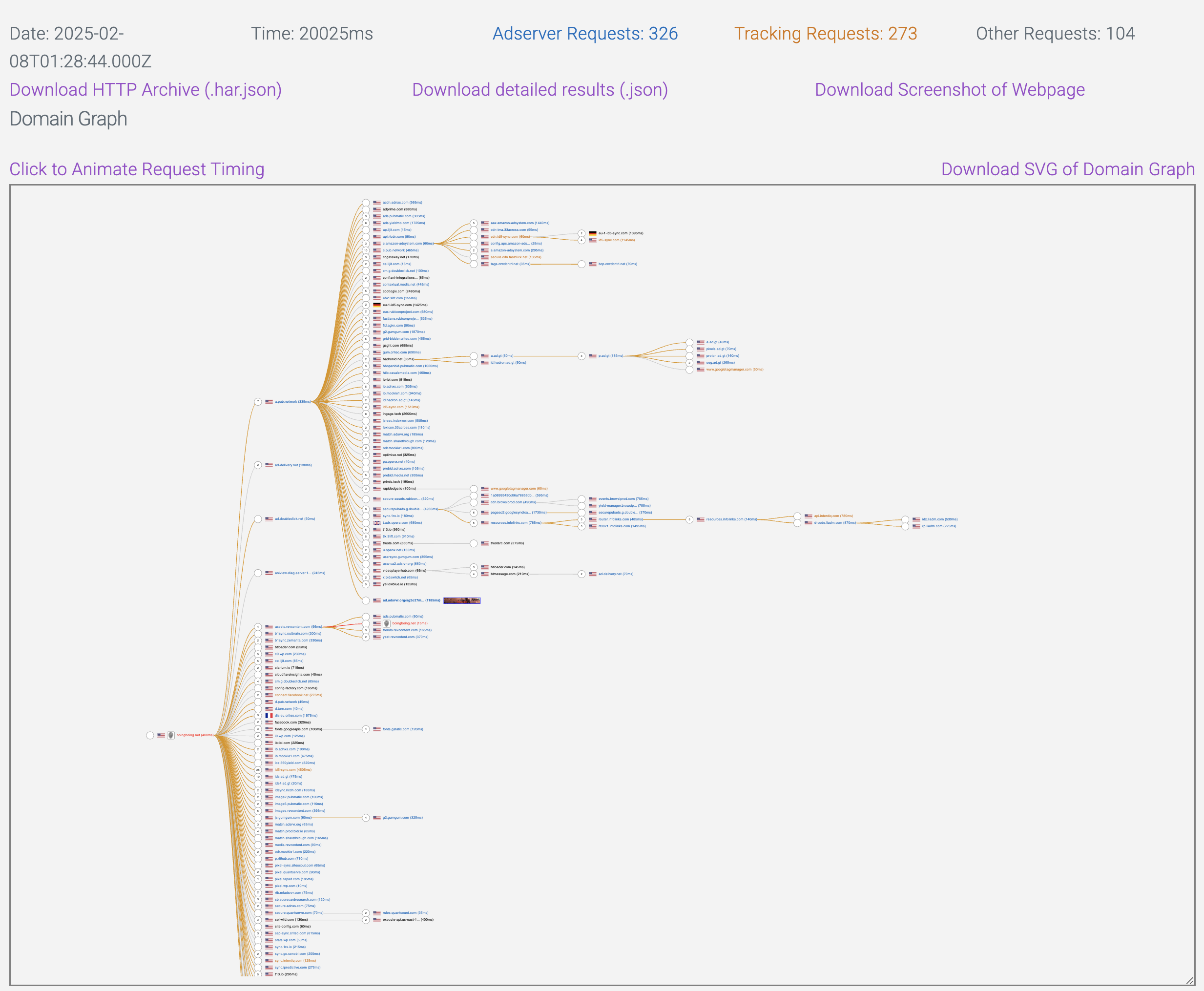
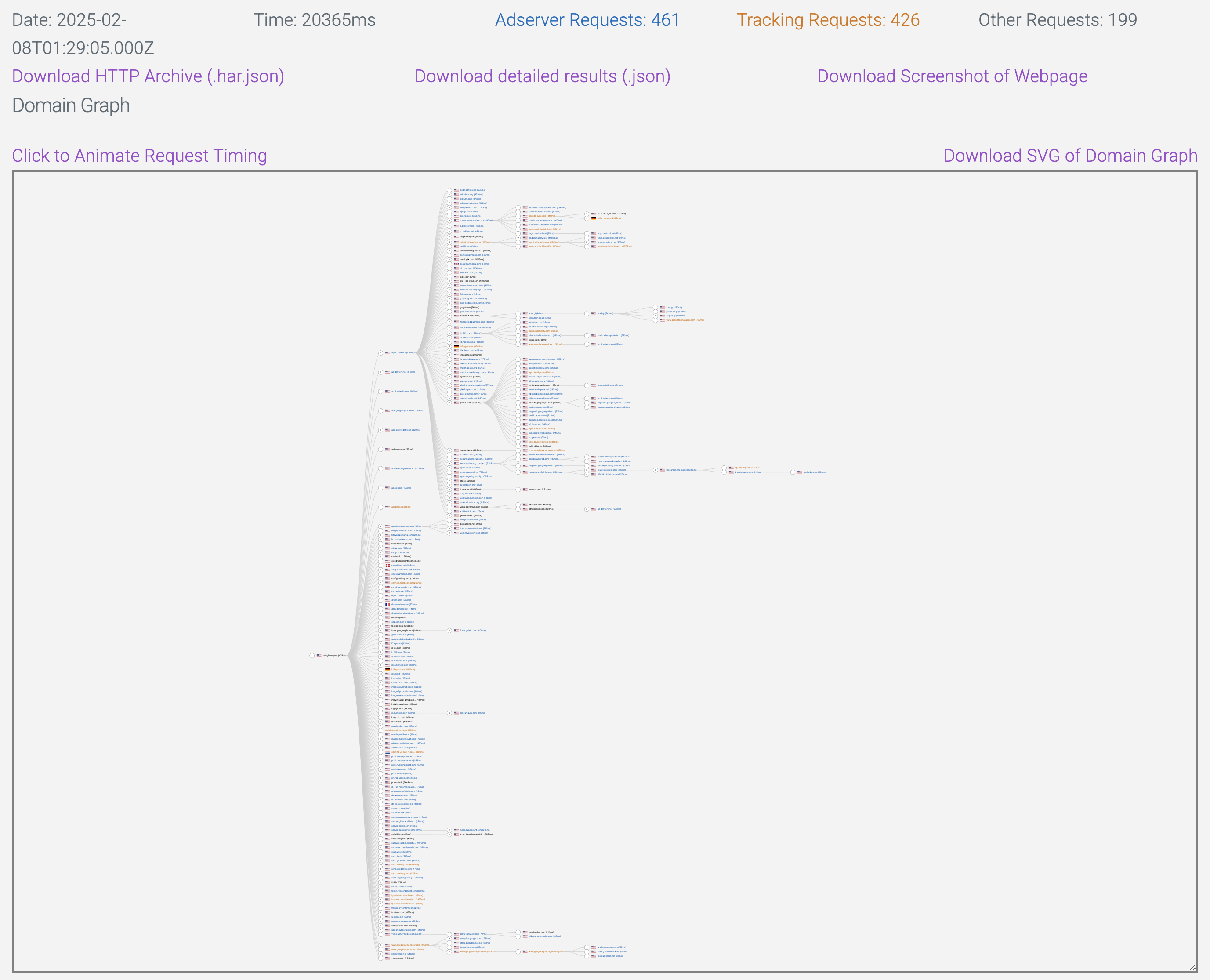
Look at that: 461 adserver requests, 426 tracking requests, and 199 other requests, which BoingBoing is glad to provide. (Pro tip: always strip tracking cruft from URLs that feature a “?” plus lots of alphanumeric jive after the final / of the URL itself. Take out the “?” and everything after it. )
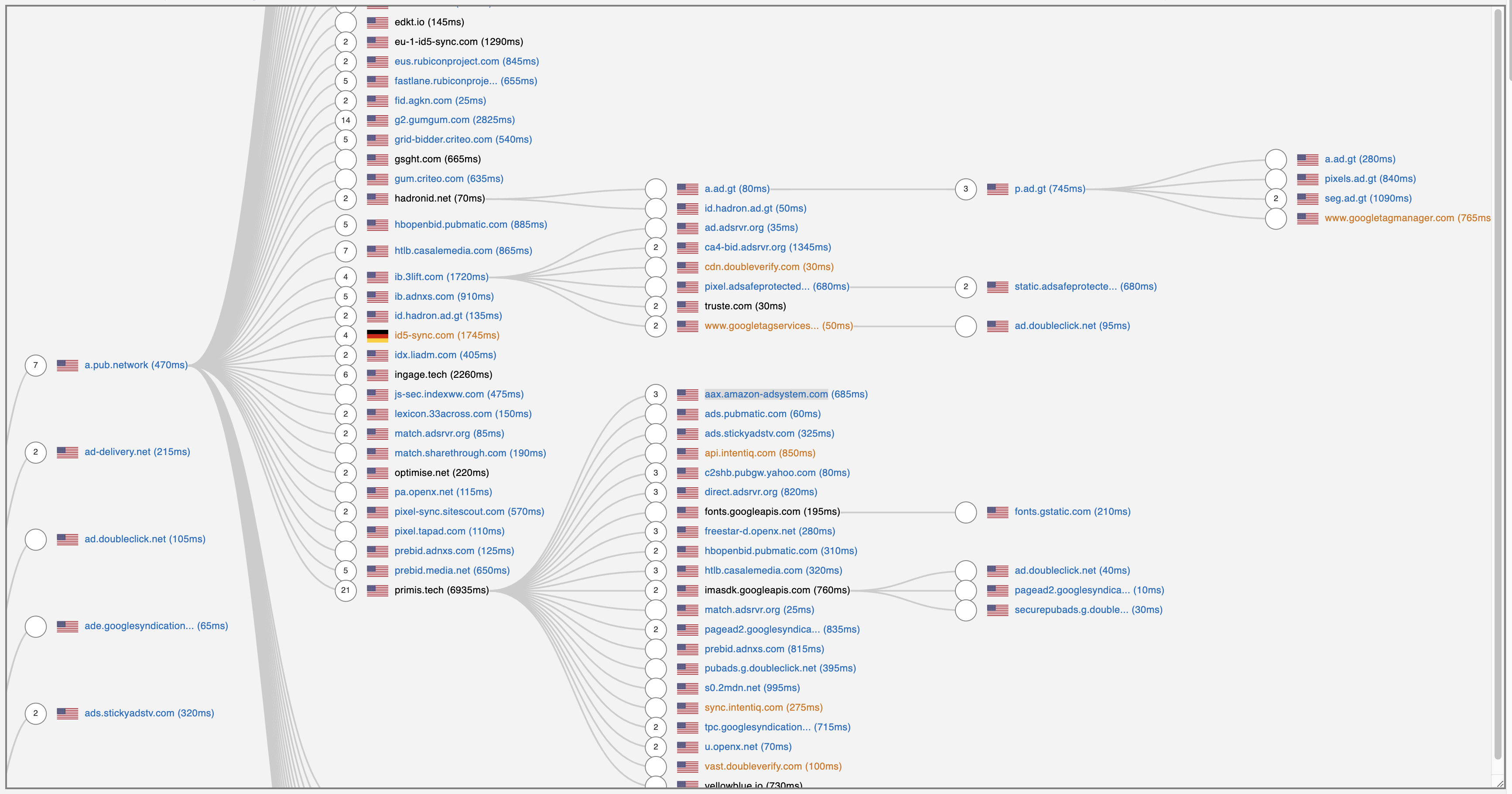
Here is a close-up of one small part of that vast spread of routes down which data about you flows:
Some sites, such as FlightAware, interrupt your experience with a notice that kindly features an X in a corner, so you can make it go away:
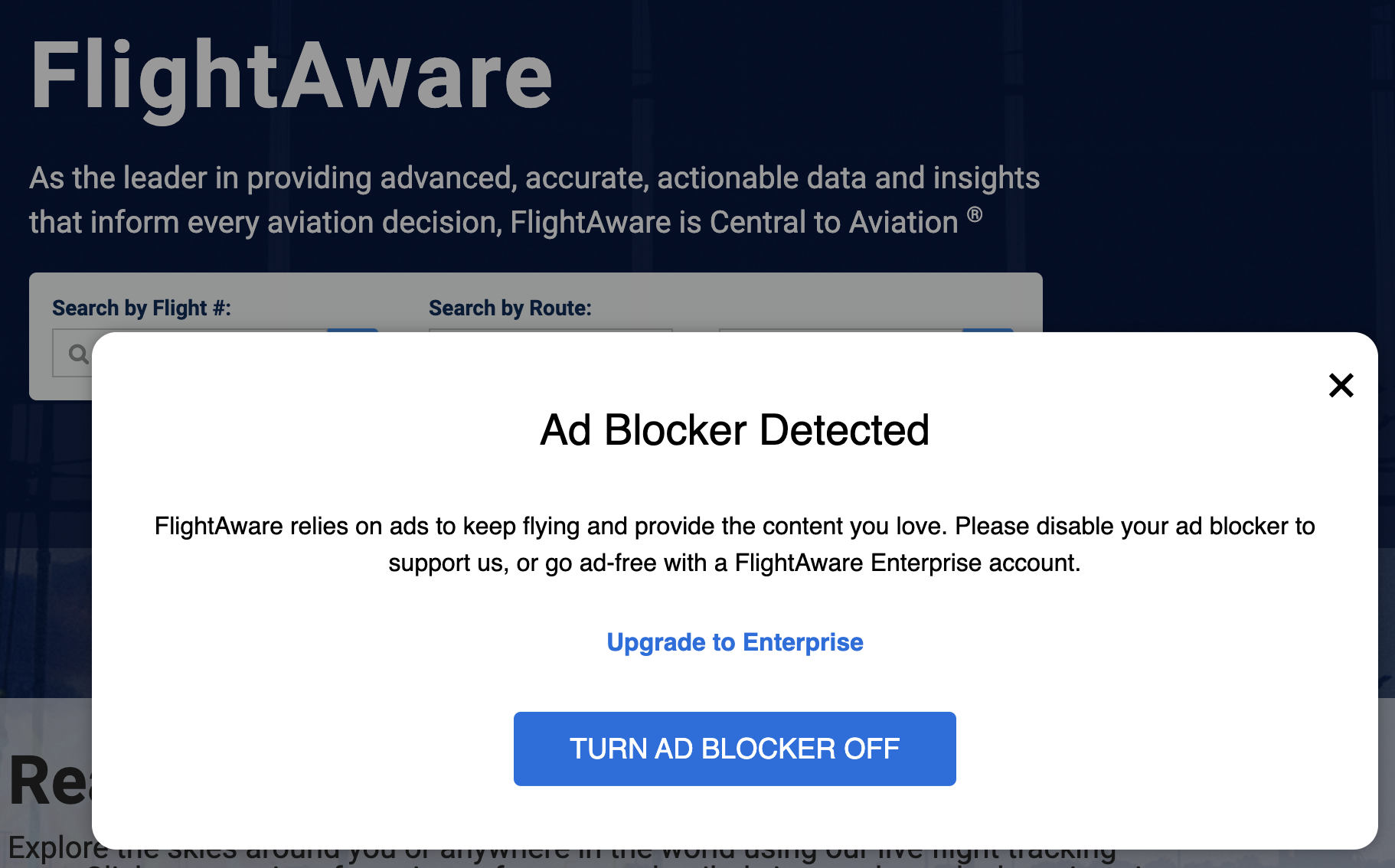
But BoingBoing doesn’t. Its policy is “Subscribe or pay with lost privacy.” So I go away.
Other sites use cookie notices that give you options such as these from a Disney company (I forget which):

Nice that you can Reject All. Which I do.
This one from imgur let’s you “manage” your “options.” Those, if they are kept anywhere (you can’t tell), are in some place you can’t reach or use to see what your setting was, or if they haven’t violated your privacy:


TED here also lets you Accept All or Reject All:
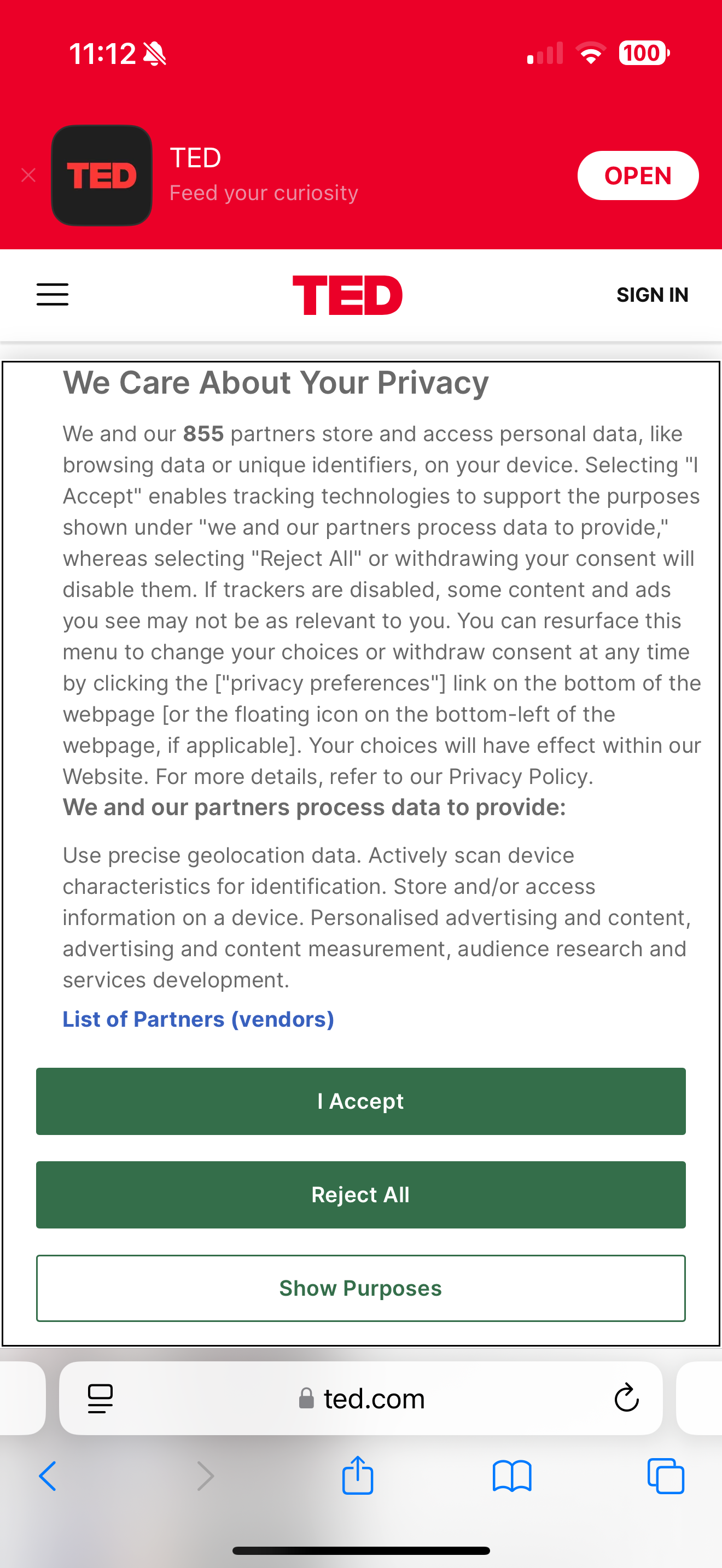
I’ve noticed that Reject All tends to be a much more prominent option lately. This makes me think a lot of these sites should be ready for IEEE P7012, nicknamed MyTerms, which we expect to become a working standard sometime this year. (I chair the working group.) I believe MyTerms is the most important standard in development today because it gets rid of this shit—at least for sites that respect the Reject All signal, plus the millions (perhaps billions?) of sites that don’t participate in the surveillance economy.
With MyTerms, sites and services agree to your terms—not the other way around. And it’s a contract. Also, both sides record the agreement, so either can audit compliance later.
Your agent (typically your browser, through an extension or a header) will choose to proffer one of a small list of contractual agreements maintained by a disinterested nonprofit. Customer Commons was created for this purpose (as a spin-off of ProjectVRM). It will be for your terms what Creative Commons is for your copyright licenses.
Customer Commons also welcomes help standing up the system—and, of course, getting it funded. If you’re interested in working on either or both, talk to me. I’m first name at last name dot com. Thanks!
Leave a Reply