Category: VRM (Page 1 of 27)

Other Looks

One possible header.

Last month, Devon Loffreto shared some takes on how this website might look with some big tweaks. Check ’em out:

One post.

On MyTerms.

I think they’re brilliant.

We do need a refresh, and I’ve been working with our friends at WordPress on that. The main constraint is that we need to base the site on a WordPress theme of some kind. I invite suggestions.

The Original and the Eventual Intention Economy

The Intention Economy subtitle. It’s the whole thing, right there.

A recent post by Simon Taylor on X expresses something important about AI agents and markets: if an AI agent arrives in a market with a clear mandate—

Get me X. Budget Y. Constraints Z.

—it obsolesces business-as-usual for digital marketing.

See, all of martech and adtech starts with the assumption that human intent is fuzzy and manipulable—and that the best customers are captive and manipulated. Let’s look at this from three angles, which are also the three things that happen in markets:

  • transactions
  • conversations
  • relationships.

On the transaction side, companies invest heavily in tracking people, analyzing their behavior, targeting ads at them, and then (in many cases) rationalizing extremely wasteful results. Plus, of course, discounting or ignoring boundless negative externalities, such as the annoying people to new extremes and massively abusing personal privacy. (In fact, the system treats absent personal privacy as a base feature.) Anyway, the entire surveillance-based advertising fecosystem exists to guess what people want, or to influence what they might want.

On the relationship side, all we have so far is on the sell side: CRM, for Customer Relationship Management, and CX, for Customer Experience. We’ve been trying here to build (or to encourage building) systems for VRM, for Vendor Relationship Management, to give CRM customer hands to shake. But, in VRM’s absence, CRM is all we’ve got. One hand clapping. Or slapping. Or pushing prospects into a funnel.

What many of us, including Simon Taylor, suggest is facilitating conversation through AI agents. Simon’s case, specifically, is that an agent representing a person doesn’t need to be guessed at. It already knows the user’s intent. So there is no attention to capture and no desire to manufacture or manipulate. The demand signal is clear from the start. That’s why he says agents can collapse the attention economy.

The underlying shift in this direction has been visible for a long time. In The Intention Economy: When Customers Take Charge (Harvard Business Review Press, 2012), I argued that markets work best when customers drive them with clear signals of demand, rather than when sellers try to infer demand through surveillance and unwelcome persuasion. I also said markets can be far richer and more vital when customers and companies operate as equals, with relationships based on mutual interest rather than forms of coercion (such as “loyalty” programs that aren’t).

The work of Vendor Relationship Management (VRM) has been about correcting that imbalance.

Instead of companies managing relationships with customers through CRM (Customer Relationship Management) systems, we need customers able to manage relationships with vendors through VRM (Vendor Relationship Management) tools.

Note that relationship is the middle name of both CRM and VRM. Markets are not just about transactions. They are about relationships that continue over time.

That’s why a working intention economy will involve far more than simple buying transactions.

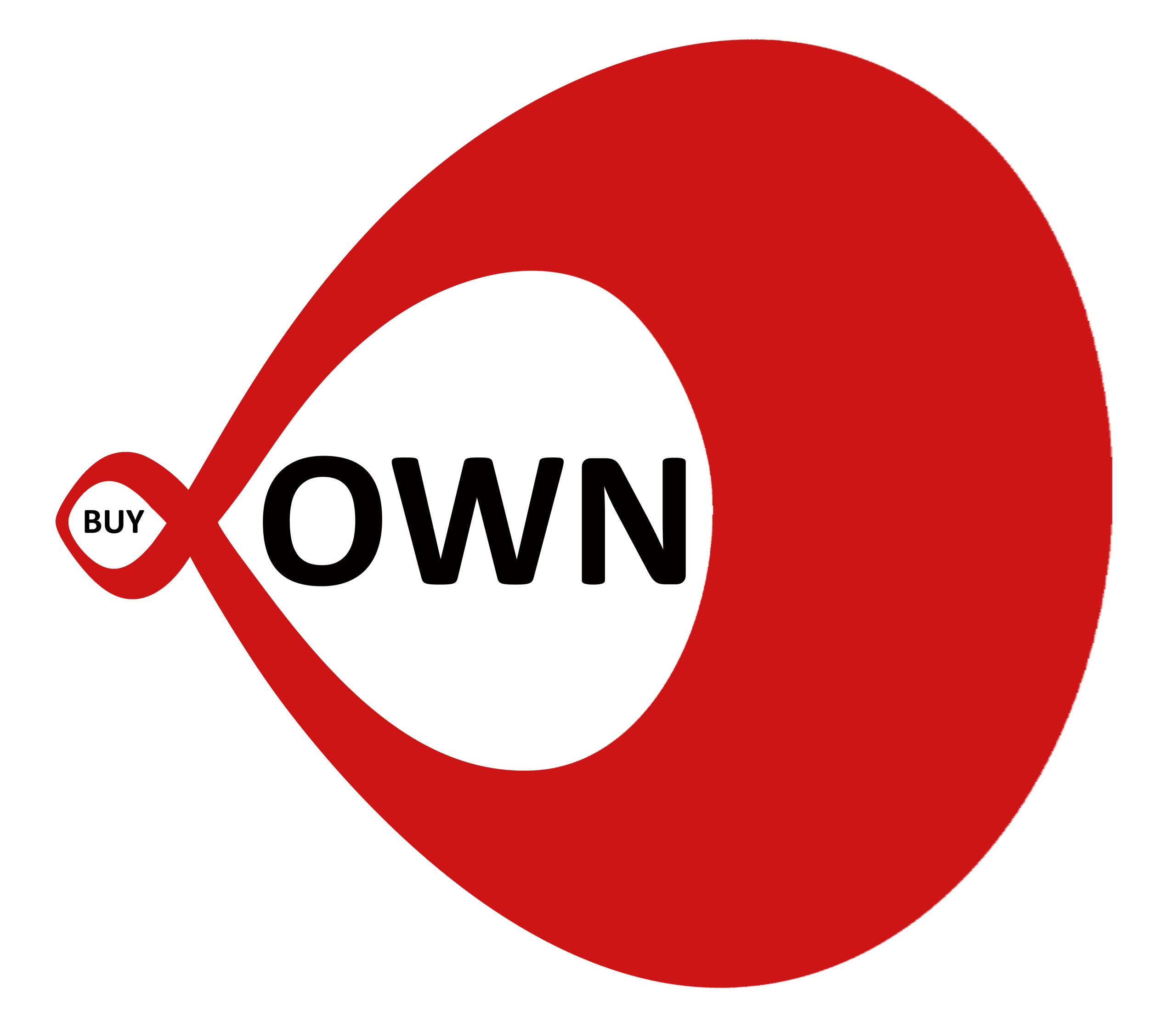
As Esteban Kolsky once put it, companies often focus almost entirely on the “buy cycle.” But customers live mostly in the “own cycle”—the long period of using, maintaining, fixing, improving, and learning from the products and services they already have:

In an intention economy, intelligence about that experience flows both ways between customers and companies. I wrote about this recently here:

Market intelligence that flows both ways.

VRM has long described one key mechanism for this: intentcasting, where customers signal their needs directly to the market rather than being targeted by guesses and ads.

Agents may make this far more feasible than it was when we first started talking about VRM nearly two decades ago.

But there’s an important point that often gets missed in current AI discussions.

The agency that matters most is the person’s, not the agent’s.

A personal AI agent is an instrument—like a phone, a computer, or a car. It acts on behalf of the individual, but the intention behind it must be the person’s own.

And that leads to another requirement:

The only truly personal agents will be owned and operated by individuals.

We don’t have that yet.

What we have instead are assistants that live inside corporate systems—helpful, sometimes impressive, but ultimately operating within feudal structures run by very large companies.

They are, at best, friendly suction cups on the tentacles of giants.

Individuals may well rent or borrow AI models from those giants. But the agents that represent us should operate inside our own environments, in our exclusive interest, rather than inside corporate systems whose interests may diverge from ours.

In other words, our agents should live in our own castles, not inside someone else’s kingdom.

When that happens—when individuals can show up in markets through tools they control—then the deeper shift becomes possible: from guesswork based on surveillance of captive customers to servicing self-qualified leads from free customers in the open marketplace.

Markets then begin to work the way markets are supposed to work: with demand and supply meeting in the open, in relationships that can last far beyond a single transaction.

This is also where work like MyTerms and the emerging ecosystem around personal AI becomes important. If individuals are to operate in markets through their own agents, those agents need ways to assert the person’s terms, preferences, and boundaries in forms that other systems can recognize and respect.

That is the direction VRM has been pointing for nearly twenty years: toward a world where individuals can arrive in markets with their own tools, their own data, and their own terms—and where markets can finally listen.

When that happens, markets will stop guessing what customers want—and start hearing them.

[Later… I actually wrote this post about a month ago, and put off publishing it while I worked on other things. Meanwhile, Adrian Gropper posted A Fork in the Road, which is required reading. I thank him for reminding me in the comments below, and for being a founding participant in ProjectVRM—going back to our earliest meetings almost 20 years ago.]

Without Privacy, VRM Can’t Happen

Nor can CRM. Not really. The middle name of both is Relationship, and those require respect for each other’s boundaries. We don’t have that yet online, and can’t without working standards (hello MyTerms), tech, and norms. In fact, the opposite prevails: extreme exploitation of absent personal privacy.

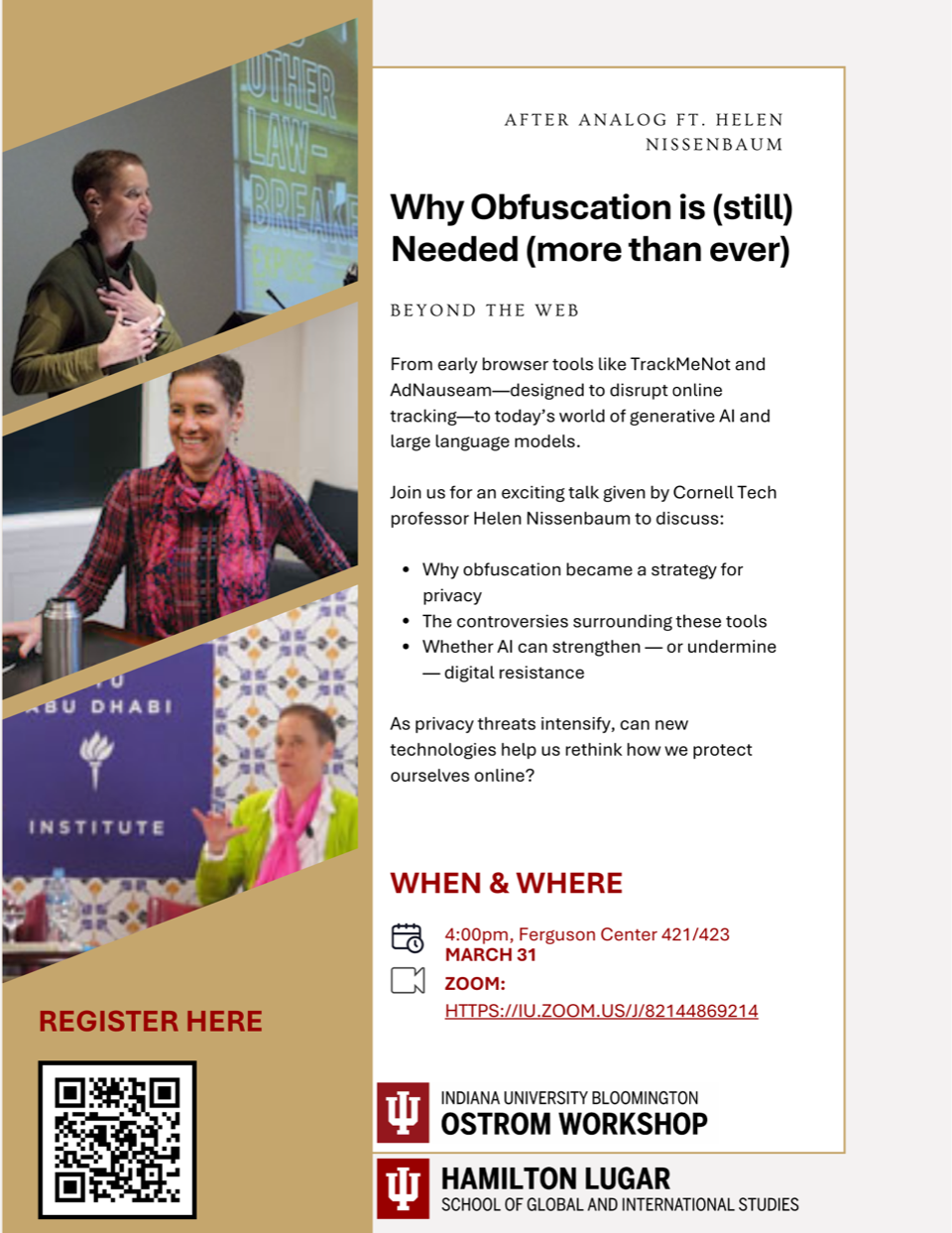
Helen Nissenbaum has been teaching us that for decades, and working on solutions. One is Adnauseum, which may be on your browser already.  It works (says that last link) “by automating ad clicks universally and blindly on behalf of its users. Built atop uBlock Origin, AdNauseam quietly clicks on every blocked ad, registering a visit on ad networks’ databases. As the collected data gathered shows an omnivorous click-stream, user tracking, targeting and surveillance become futile.” In another word, obfuscation.

And that’s what Helen will unpack when she speaks in our salon series here at Indiana University next Tuesday at 4 pm Eastern, and on Zoom. Her title is Why Obfuscation is (still) Needed (more than ever). Here’s the flyer, with the registration and Zoom links:

And in case you don’t click on that, here it is again.

See you there.

The Only Way to Get Privacy Online

No regulation to make organizations respect personal privacy will work.

We’ve had cookie laws since the ’00s, the GDPR since the ’10s, and the CCPA since 2020. None of them has worked.

All those regulations are aimed at reducing the power of organizations to violate personal privacy. None is to empower people. That’s why, under those regulations, all we can do is agree to the terms organizations provide. We have no independent agency.  All we have is what they promise, and their promises aren’t worth the pixels they’re printed on.

The only way we will get privacy is with contracts, which are laws that two parties make for themselves.

And the only way to make contracts work, at scale, is if we are the ones proffering those terms as first parties, and organizations agree to them as second parties. This flips the script on business-as-usual online.

By the old script, privacy is a grace of corporate obedience to selections in cookie notices, many of which provide no choice at all. There is “Accept,” and that’s it. In that case, all you’re accepting is a corporate privacy policy, which is typically just a fig leaf over the company’s hard-on for personal data.

Regardless of what you do with a cookie notice, chances are the company still tracks you like a marked animal.  See here and here. You also have no easy of auditing compliance, because you keep no record of your “choices.” And we have that system because the incentives are worse than misaligned: they are completely broken.

See, if you are a typical website, you get paid for allowing third parties to harvest visitors’ personal data and use it to aim personalized advertising at their eyeballs. This is morally wrong on its face, but easily rationalized because it pays.

In the natural world, a store would never plant tracking beacons on every shopper, or require those shoppers to “choose” privacy protections by stripping naked and then selecting the purposes to which their personal tracking beacons will be put. Shoppers would avoid that store like the plague,

However, on the Net and the Web, we haven’t yet invented privacy, just as we hadn’t in the natural world before we invented clothing and shelter. So, on the Net and the Web, we are still naked as fish. As a result, a plague of near-ubiquitous surveillance has been raging online for decades. It is nearly impossible to avoid getting infected.

Most of that surveillance is for the $742 Billion surveillance-fed fecosystem* called adtech. And the only way we can obsolesce it is with a business ecosystem that works for everyone: customers and companies alike, and together.

We can do that now, with MyTerms.

MyTerms is the nickname for IEEE P7012 Standard for Machine Readable Personal Privacy Terms, which will be published next week after eight years in the works. (I chair the working group.)

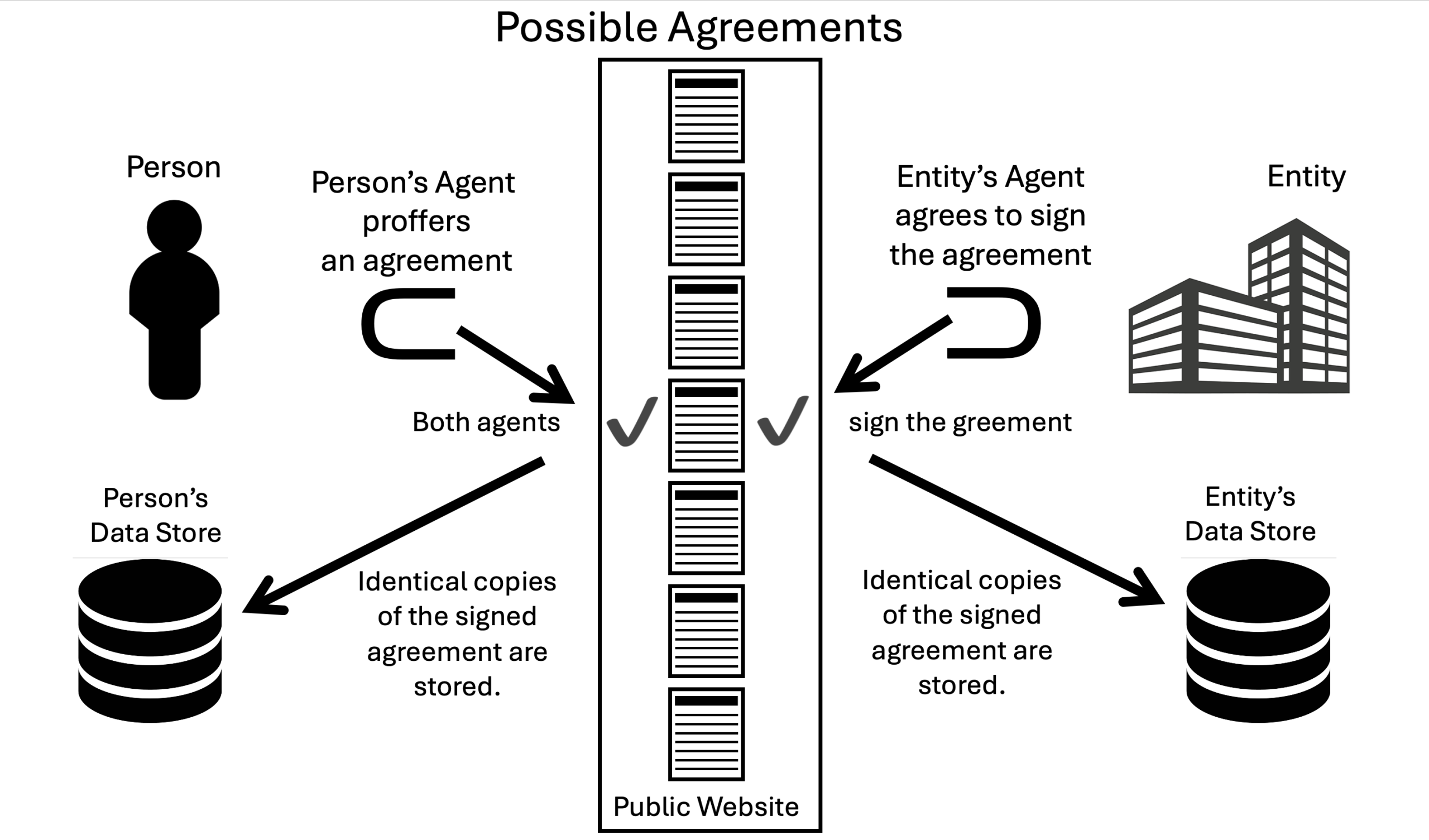
It describes a protocol in the diplomatic sense: a way to reach and record agreements. Here is a diagram that shows how it works:

It is also the ultimate product of ProjectVRM, which began in 2006 with a mission: to prove that free customers are more valuable than captive ones—to companies, to markets, and to themselves. It was to ProjectVRM’s nonprofit spinoff, Customer Commons, that the IEEE came in 2017 with the challenge to create the MyTerms standard.

Of course, every agreement needs to be good for both sides. Right now we have five draft agreements for that. SD-BASE says “Service Delivery only.” This one requires that the site or service provide the visitor only what the visitor came for, and not to share personal data with third parties. This will make the site or service more inviting. (Customer Commons also plans to offer a trustmark to sites and services that sign MyTerms Agreements.) Lots of other mutually respectful agreements can also be built on top of SD-BASE: agreements that respect personal agency as well as privacy.

Other initial MyTerms agreements cover data portability, intentcasting, data-for-good, and AI training.

MyTerms will foster businesses and business methods that the surveillance fecosystem prevents. We describe how that will work, and some of the businesses MyTerms will create and improve, in The Cluetrain Will Run from Customers to Companies.

Of course, we need to develop tools and services for making that cluetrain run.  Please tell us what you’ve got or plan.

The place to list those is in a new section of our Developments page. We also need to re-write and condense our privacy manifesto, and welcome help with both.

We also need to thank our many teams over the past two decades for jobs well done, even if many of those jobs didn’t go anywhere, mostly because they were too early.

Now is the time, because the world is fed up with surveillance—and it is easier than ever to develop tools and services using AI.

MyTerms will be announced on 28 January at this event in the Imperial Business School and online. Please come.


*The word fecosystem is apropos, kinda like Cory Doctorow’s ensittification. Spread both words.

When Branding Means Relating

What is your best friend’s personal brand? How about your spouse’s?

Those questions came to mind as I read through The Death of Merchandising in an Online World, by  Dana Blankenhorn, who is reliably wise. In that post, Dana correctly observes that brand value is declining as merchandising shifts from stores to online services, and to influencers who are also stores.

I think there’s also something else going on at the same time: the shift in media from real advertising to the online equivalent of junk mail, which is what you see with nearly every ad you encounter on your browsers and apps. To marketers, browsers and apps are boxes for junk mail, which at its most ideal is personalized by surveillance.  As I put it in Separating Advertising’s Wheat and Chaff, ” Madison Avenue fell asleep, direct response marketing ate its brain, and it woke up as an alien replica of itself.”

I wrote that a decade ago. With AI today, that alien replica is the real thing. Madison Avenue is now AM radio, with a whip antenna and tail fins.

Brand advertising worked best when “the media” were mostly print and broadcast. Sources of both were so few that they all fit on a newsstand and the dials of radios and TVs. To operate a source of either, you needed a printing plant or transmitting towers. Publishers and broadcasters are still around, but now their goods are mostly distributed over the Internet and consumed through glowing rectangles. And they’re competing in a world where the abundance of other sources of content is incalculably vast. In that world, the only places you can still reliably create and maintain brands is by sponsoring live events. Especially sports. That’s why I know fifteen minutes will save me fifteen percent with Geico, even though Geico stopped saying that years ago. I also know that you only pay for what you need with Liberty Mutual. And I’ll never get the Shaefer Beer jingle out of my mind.

On the whole, however, branding has finished running the same course as the broadcasting it paid for.

It helps to remember that the words brand and branding were borrowed from ranching. They applied especially well when people had few choices of media, and few if any ways to avoid ads meant to burn the names of companies and products onto mental hides.

What we really (or at least should) mean by brand today is reputation. How a business obtains that in our still-new Digital Age (now with AI!) is an open question.

I believe the answer will come from the natural world, where markets have been working far longer than we’ve had digital media, broadcasting, or print. It was in the natural world that two very different people—one an athiest and the other a pastor—separately explained to me, not long after The Cluetrain Manifesto came out, that markets are not just about transactions and (as Cluetrain insisted) conversations. They are about relationships.

Marketing prevents those. Or shortcuts them. Especially as it continues to devolve into funnels at the bottom end of which are transactions alone, or entrapment in a company’s “loyalty” system.

The Internet and the Web were both designed to support maximum agency and independence for every entity using them. We can have far better markets and marketing if demand and supply both work with maximized agency, and scale in ways that are good for both. That’s the idea behind market intelligence that flows both ways.

Making and maintaining those kinds of relationships will be VRM+CRM, What those together will make are wholes that exceed the sum of either part.

Gathering the MyTerms Troops

MyTerms (IEEE P7012) is on track to be ProjectVRM’s biggest achievement—and maybe the biggest thing on the Net since the Web. I’m biased, but I believe it.

And that track runs through three events next week:

  1. VRM Day, on Monday October 20.
  2. IIW, the Internet Identity Workshop, from Tuesday to Thurdsday, October 21 to 23.
  3. AIW, the Agentic Identity Workshop, on Friday, October 24.

All three are at the Computer History Museum in Silicon Valley. Register at those links. VRM Day is free. The others are relatively inexpensive.

Here is some of what’s going on around MyTerms.

Iain and Nitin will also be at the events next week. So will others from the MyTerms working group, Kwaai, and other allied efforts.

We plan to have VRM Day online by Zoom (or the equivalent—we’ll let you know); but we’ll get the best results if you’re there in person.

Hope you can make it, and see you soon.


Four Roads to The Intention Economy

Thirteen years after The Intention Economy was published by Harvard Business Review Press, there are now four clear paths toward making it come true.

  1. IEEE P7012, aka MyTerms. This will make individuals first parties in their agreements with companies, completely flipping the status quo that has been with us since industry won the Industrial Revolution and manifests today in those insincere and annoying cookie notices that interrupt your experience every time you visit a new website or open a new app. MyTerms makes each of us first parties in agreements with sites and services, and in full charge of personal privacy online.
  2. The First Person Project, or FPP  (website pending). With help on the buy side from Customer Commons and on the sell side by Ayra, we can finally replace “show your ID” with verifiable credentials presented on an as-needed basis by independent and self-sovereign individuals operating inside their own webs of trust.
  3. Visa Intelligent Commerce, which will make intentcasting happen in a big way. It will also elevate the roles of Inrupt and the open-source  Solid Project.
  4. Personal AI. This is AI that is as much yours as your shoes, your bike, and your PC. Personal, not personalized.

To explain how these will work together, start here:

Not long after The Intention Economy came out in May, 2012, Robert Thomson, Managing Editor of The Wall Street Journal, wanted the book’s opening chapter to serve as the cover essay for the Marketplace section of an upcoming issue. Harvard Business Review Press didn’t like that idea, so I wrote an original piece based on one idea in the book: that shoppers will soon be able to tell the market what they’re looking for, in safe, secure and anonymous ways—a kind of advertising in reverse that the book called “personal RFPs” and has since come to be called “intentcasting.” This became The Customer as a God: The image above was the whole cover of the Marketplace section on Monday,  July 23, 2012. The essay opened with these prophetic words: “It’s a Saturday morning in 2022…”

It is now a Friday morning in 2025, and that godly future for customers is still not here. Yes, we have more market power than in 2012, but we are digital serfs whose powers are limited to those granted by  Amazon, Apple, Facebook, Google, Microsoft, and other feudal overlords. This system is a free market only to the degree that you can choose your captor.  This has led to—

The IONBA (Internet Of Notning But Accounts) is based on a premise: that the best customers are captive ones. In this relic of the industrial age, customers are captive to every entity that requires logins and passwords. Customers also have no ways of their own to globally control what data is collected about them, or how. Or to limit how that data is used.  This is why our digital lives are infected by privacy-killing data-collection viruses living inside our computers, phones, TVs, and cars.

If you didn’t know about those last two, dig:

  • Consumer Reports says “All smart TVs—from Samsung, LG, you name it—collect personal data.” They also come with lame “privacy” controls, typically buried deep in a settings menu. (Good luck exhuming them. The ones in our TCL and Samsung TVs have all but disappeared.)
  • Mozilla calls new cars “the Worst Product Category We Have Ever Reviewed for Privacy.” There is also nothing you can do to stop your car from reporting on everything your car does—and everything you do, including sexual ativity—to the carmaker, insurance companies, law enforcement, and who knows who else. This data goes out through your car’s cell phone, misleadingly called a telematics control unit. The antenna is hidden in the shark fin on your car’s roof or in an outside mirror.

Businesses are also starting to lose faith in surveillance, for at least eight reasons:

  1. People hate it.
  2. They also fight it. By 2015 ad blocking and tracking protection were the biggest boycott in world history.
  3. It tarnishes brands.
  4. Ad fraud is a gigantic problem, and built into the system.
  5. It commits Chrysoogocide (killing golden geese, most notably publishers)Bonus link.
  6. Regulatory pressure against it is getting bigger all the time.
  7. Advertisers are finally remembering that brands are made by ads aimed at populations, while personalized ads are just digital junk mail.
  8. Customers are using AI tools for guidance toward a final purchase, bypassing marketing schemes to bias purchasing decisions along the way. For more on that, see Tom Fishburne’s cartoon, and Bain’s report about it.

So our four roads to The Intention Economy start with the final failings of the systems built to prevent it. Now let’s look at those roads.

1—IEEE P7012 “MyTerms”

MyTerms, the most important standard in development today, will be a keystone service of Customer Commons, the nonprofit spinoff of ProjectVRM. It will do for contract what Creative Commons did for copyright: give individuals a new form of control. With MyTerms, agreements between customers and companies will be far more genuine mutual, and open to new forms of innovation not based on the kind of corporate control that typifies the IONBA. For example, it can open Visa Intelligent Commerce to conversations and relationships that go far past transaction. Take for example Market intelligence that flows both ways. While this has been thinkable for a decade or more (that last link is from 2016), it’s far more do-able when customers and companies have real relationships based on equal power and mutual interests. These are best framed up on agreements that start on the customer’s side, and give customers scale across all the companies with which they have genuine relationships.

2—First Person Project (FPP)

To me, FPP begins with the vision “Big Davy” Sallis came up with while he was working for VISA Europe in 2012, and read the The Intention Economy. At the time, he wanted Visa to make VRM a real category, but assumed that would take too long. So he decided to create a VRM startup called Qredo. Joyce and I consulted Qredo until  Davy died (far too young) in 2015. Qredo went into a different business, but a draft I created for Qredo’s original website survives, and it outlines much of what the  FPP will make possible. That effort is led by Drummond Reed, another friend and collaborator of Davy’s and a participant in ProjectVRM from the start. Drummond says the FPP is inspired by Why We Need First Person Technologies on the Net, a post published here in 2014. That post begins,

We need first person technologies for the same reason we need first person voices: because there are some things only a person can say and do.

Only a person can use the pronouns  “I,” “me,” “my” and “mine.” Likewise, only a person can use tools such as screwdrivers, eyeglasses and pencils. Those things are all first person technologies. They were invented for individual persons to use.

We use first person technologies the same unique ways we use our voices.

Among other things, the First Person Project will fix how identity works on the Internet. With FPI—First Person Identity—interactions with relying parties (the ones wanting “your ID”) don’t need your drivers license, passport, birth certificate, credit card, or account information. You just give them what’s required, on an as-needed basis, in the form of verifiable credentials. The credentials you provide can verify that you are a citizen of a country, licensed to drive, have a ticket to a game, or whatever. In other words, they do what Kim Cameron outlined in his Laws of Identity: disclose minimum information for constrained uses (Law 2) to justifiable parties (Law 3) under your control and consent (Law 1). The credential you present is called a DID: a Decentralized Identifier. No account is required.

Trust in FPI also expands from individual to community. Here is how Phil Windley explains it in Establishing First Person Digital Trust:

When Alice and Bob met at IIW, they didn’t rely on a platform to create their connection. They didn’t upload keys to a server or wait for some central authority to vouch for them. They exchanged DIDs, authenticated each other directly, and established a secure, private communication channel.

That moment wasn’t just a technical handshake—it was a statement of first-person identity. Alice told Bob, “This is who I am, on my terms.” Bob responded in kind. And when they each issued a verifiable relationship credential, they gave that relationship form: a mutual, portable, cryptographically signed artifact of trust. This is the essence of first-person identity—not something granted by an institution, but something expressed and constructed in the context of relationships. It’s identity as narrative, not authority; as connection, not classification.

And because these credentials are issued peer-to-peer, scoped to real interactions, and managed by personal agents, they resist commodification and exploitation. They are not profile pages or social graphs owned by a company to be monetized. They are artifacts of human connection, held and controlled by the people who made them. In this world, Alice and Bob aren’t just users—they’re participants.

This also expands outward into community, and webs of trust. You get personal agency plus community agency.

The FPP covers a lot more ground than identity alone, but that’s where it starts. Also, Customer Commons is a funding source for the FPP, and I’m involved there as well.

3—Visa Intelligent Commerce

The press release is Find and Buy with AI: Visa Unveils New Era of Commerce. Less blah is Enabling AI agents to buy securely and seamlessly. Here’s the opening copy.

Imagine a future where an AI agent can shop and buy for you. AI commerce — commerce powered by an AI agent — is going to transform the way consumers around the world shop.

Introducing Visa Intelligent Commerce, an initiative that will empower AI agents to deliver personalized and secure shopping experiences for consumers – at scale.

From browsing and selection to purchase and post-purchase management, this program will equip AI agents to seamlessly manage key phases of the shopping process.

Visa CEO Ryan McInerney says a lot more in a 1:22 talk at Visa Product Drop 2025. The most relevant part starts about 26 minutes in, with a demo starting at about 31:30. Please watch it. Much of what you see there owes to Inrupt and Solid, which Sir Tim Berners-Lee says were inspired by The Intention Economy. For more about where Inrupt and Solid fit in Visa Intelligent Commerce, see Standards for Agentic Commerce: Visa’s Bold Move and What It Means: Visa’s investment in safe Intelligent Commerce points to a future of standards-forward personal AI, by John Bruce, Inrupt’s CEO. John briefed Joyce and me over Zoom the other day. Very encouraging, with lots to develop on and talk about.

More links:

Some news being made about Visa Intelligent Commerce:

4—Personal AI

Reza Rassool was also inspired by The Intention Economy when he started Kwaai.ai, a nonprofit community developing open-source personal AI. I now serve Kwaai as its volunteer Chief Intention Officer.

Let’s look at what personal AI will do for this woman:

Looks great, but we’re stuck in IONBA, she has little control over her personal data in all those spaces. For example,

  • She doesn’t have the digital version of what George Carlin called “a place for my stuff.” (Watch that video. It’s brilliant—and correct.)
  • She has few records of where she’s been, who she’s been with and when—even though apps on her phone know that stuff and are keeping it inside the records of her giant overlords and/or selling it to parties unknown, with no way yet for getting it back for her own use.
  • Her finances are possibly organized, but scattered between the folders she keeps for taxes, plus the ones that live with banks, brokers, and other entities she hardly thinks about. It would be mighty handy to have a place of her own where she could easily see all her obligations, recurring payments, subscriptions, and other stuff her counterparties would rather she not know completely.
  • Her schedules are in Apple, Google, and/or Microsoft calendars, which are well app’d and searchable, but not integrated. She has no digital calendar that is independent and truly her own.
  • Her business and personal relationship records are scattered across her contact apps, her Linkedin page, and piles of notes and business cards. She has no place or way of her own to manage all of them.
  • Her health care records (at least here in the U.S.) are a total mess. Some of them ares inside the MyCharts and patient portals provided by separate (and mostly unconnected) health care specialists and medical systems. Some of it is in piles of printouts she has accumulated (if she’s kept them) from all the different providers she has seen. Some of it is in fitness and wellness apps, all with exclusive ways of dealing with users. None of it is in a unified and coherent form.

So the challenge for personal AI is pulling all that data out of all her accounts, and putting it into forms that give her full agency, with the help of her personal AIs.  Personalized AIs from giants can’t do that. We need our own personal AIs.

And there we have it: Four roads to a world where free customers prove more valuable than captive ones. And we’re making it happen. Now.

The MyTerms PAR

With MyTerms, the person (and their electronic agent) is the first party, and the corporate entity (with its agent) is the second party. This is essential for assuring full respect for personal privacy in the digital world.

Every IEEE standard starts with a PAR: a Project Authorization Request.

Here is the PAR for EEE P7012 (nicknamed MyTerms—much as IEEE 802.11 is nicknamed Wi-Fi). It launched a working group in 2017 (that I now chair), and is expected to go from draft to done by early 2026.

Because what the standard will do is plainly laid out in the PAR, I’m breaking its paragraph into separate sentences to make reading it easier:

This draft standard covers contractual interactions and agreements between individuals and the service providers they engage on a network, including websites.

It describes how individuals, acting as first parties, can proffer their privacy requirements as contractual terms and arrive at agreements recorded and kept by both sides.

These terms shall be chosen from a collection of standard-form agreements in a roster kept by an independent and neutral non-business entity.

Computing devices and software performing as agents for both first and second parties shall engage using any protocol that serves the purpose.

The first party shall point to a preferred agreement, or a set of agreements, from which the second party shall accept one.

Party-to-party negotiations over terms in any of these contracts or other agreements are outside the scope of this standard. If both parties agree, the chosen contract or agreement shall be signed electronically by both parties or their agents.

A matching record shall be kept by both sides in a form that can be retrieved, audited, or disputed, if necessary, at some later time–and which is available to do so easily.*

I can’t share the draft before the final version is published, but I can say that what it says is about as simple as what you read above. It also does not specify what tech or protocol to use. This is to leave development as open as possible.

The main thing is that MyTerms obsolesces notice-and-consent by basing privacy agreements on contracts that individuals proffer as first parties, and sites and services agree to as second parties.

Never mind that this hardly seems thinkable to the status quo. The same was once said of the Internet, the Web, email, and other free and open graces we take for granted today.

Putting each of us in charge of our privacy online is what makes MyTerms the most important standard in development today. But only if we make it so.

If you want to get involved, help us build out Customer Commons, so it can play the same role for personal privacy terms that Creative Commons plays for personal copyright.


*Shall is  IEEE-speak for will or must. The purpose of that rule is to make clear that it does not mean shouldcould, or any other modal auxiliary verb.

On Customer Constituency

A customer looks at a market where choice rules and nobody owns anybody. Source: Microsoft Copilot | Designer

I’m in a discussion of business constituencies. On the list (sourced from the writings of Doug Shapiro) are investors, employees, suppliers, customers, and regulators.

The first three are aware of their membership, but the last two? Not so sure.

Since ProjectVRM works for customers, let’s spin the question around. Do customers have a business constituency? If so, businesses are members by the customer’s grace. She can favor, ignore, or more deeply engage with any of those businesses at her pleasure. She does not “belong” to any of them, even though any or all of them may refer to her, or their many other customers, with possessive pronouns.

Take membership (e.g. Costco, Sam’s Club) and loyalty (CVS, Kroger) programs off the table. Membership systems are private markets, and loyalty programs are misnomered. (For more about that, read the “Dysloyalty” chapter of The Intention Economy.)

Let’s look instead at businesses that customers engage as a matter of course: contractors, medical doctors, auto mechanics, retail stores, restaurants, clubs, farmers’ markets, whatever. Some may be on speed dial, but most are not. What matters in all cases is that these businesses are responsible to their customers. “The real and effectual discipline which is exercised over a workman is that of his customers,” Adam Smith writes. “It is the fear of losing their employment which restrains his frauds and corrects his negligence.” That’s what it means to be a customer’s constituent.

An early promise of the Internet was supporting that “effectual discipline.” For the most part, that hasn’t happened. The “one clue” in The Cluetrain Manifesto said “we are not seats or eyeballs or end users or consumers. we are human beings and our reach exceeds your grasp. deal with it.” Thanks to ubiquitous surveillance and capture by corporate giants and unavoidable platforms, corporate grasp far outreaches customer agency.

That’s one reason ProjectVRM has been working against corporate grasp since 2006, and just as long for customer reach. Our case from the start has been that customer independence and agency are good for business. We just need to prove it.

ProjectVRM 2.0

It took a while, but our website is now on its own. Big thanks go to the Berkman Klein Center for hosting us on its blog server since 2006. Also for continuing to host our mailing list and our wiki. And to all the friends who helped, including those at WordPress and Pressable, who made the transition smooth and complete. Links to every post and page we’ve published at blogs.harvard.edu/vrm/ (our old location) now travel down the same directory paths at projectvrm.org/. There will be no 404s. This is a rare thing for any site that moves from one host to another.

Clearly, this is not the one-year project we imagined in the first place. It may not be a one-generation project. But we will get from the state on the left above to the one on the right. And thanks to Gapingvoid‘s Hugh MacLeod for drawing that illustration in the first place, way back in 2005.


« Older posts

© 2026 ProjectVRM

Theme by Anders NorenUp ↑