Category: Uncategorized (Page 2 of 3)

VRM happenings in France

Before I spoke briefly to the Cap Digital innovation cluster in Paris a few weeks ago, I asked how many in the audience had heard of VRM. Every hand went up.

FING, the Foundation Internet Nouvelle Génération, has been hip to VRM for some time. So have many of its members, which overlap with Cap Digital and other tech/business circles.

Companies such as Privowny (founded a by Hervé Le Jouan and HQ’d in Palo Alto) and OneCub are addressing multiple VRM challenges.

The latest bit of encouragement comes in the form of a tweet from @DigiWorldIDATE, posted from the DigiWorld Summit, a three-day event that wrapped today in Montpelier, France. The tweet is in this haystack here. If anybody was there and wants to report on what got talked about, please share it. From what little I read, sounds like it was good.

Bonus link.


An olive branch to advertising

Online advertising has a couple of big problems that could possibly be turned into opportunities. One is Do Not Track, or DNT. The other is blocking of ads and/or tracking.

In my last post I talked about how DNT might be turned into DNT-D, for Do Not Track – Dialog. Then I said a bit more about that in this post at Harvard Business Review. Note that DNT is one among many possible HTTP headers. If DNT bogs down in politics (which it already has to some degree), there is nothing to stop anybody from working on alternatives that create opportunities for agreement and productive hand shaking between users and sites.

On blocking of ads and tracking, I’ll start by leveraging this from my HBR post:

According to ClarityRay’s Adblock Report, issued in May of this year, the overall rate of ad-blocked impressions in the U.S. and Europe is 9.26%. Even if we discount the source (ClarityRay’s business deals with ad blocking), the rate of ad blocking is substantial. Mozilla shows 170.5 million downloads of Adblock Plus, with more than 3 million downloads in the last 30 days alone, and an average of 13.9 million daily users. That’s for just one add-on for one browser.

People are also taking action against unwanted tracking. All the major browsers support some form of Do Not Track (DNT) signaling by browser users to websites, and Microsoft is committed to turning it on by default with the next version of Internet Explorer.

But to engage, VRM can’t just draw lines in the sand. It will also provide ways to cross those lines, offer a handshake, and back that handshake by demonstrating new and better ways of doing business.

Next, here’s a list of ad blocking tracking monitoring and blocking services, listed in the ProjectVRM wiki:

Abine DNT+, deleteme, PrivacyWatch: privacy-protecting browser extentions

Collusion Firefox add-on for viewing third parties tracking your movements

Disconnect.me  browser extentions to stop unwanted tracking, control data sharing

Ghostery  browser extension for tracking the trackers

PrivacyScore  browser extensions and services to users and site builders for keeping track of trackers

And I’m sure that leaves out a few more.

This is all a natural reaction simple bad manners on the part of sites and some of their advertisers and third party partners. Civilization runs on manners. The whole Net runs on the form of manners we call protocols. These are simply agreements about how things get along. They take the form of working together. In most cases no agreements are signed.

This is very much the way things work in the open marketplaces of the physical world. When we go in to a store, we behave as civilized human beings, and the stores are discreet about following us. (Which they do in many cases, and we know, either tacitly or explicitly.)

When you walk out of a department store on Main Street or a mall, nobody follows you with their hand in your pocket, saying “I’m just following you around so we can give you a better experience.” Yet this is nearly pro forma on the commercial Web today, and why we have the growing list of work-arounds above.

Yet few of us want no advertising at all, anywhere. Most of us appreciate what advertising can do, and certainly what it pays for, which is many of the graces that constitute the Web we know, starting with search.

The advertising business does have a conscience. The IAB, for example, has a Self-Regulatory Program for Online Behavioral Advertising. Leaders in that industry, such as John Battelle and Randall Rothenberg, have done much to address the industry’s problems with overreach.

But they can’t do it alone. We can help from our end. One way is by making DNT-D happen, or by coming up with something better that respects what only advertising can do (as well as what we’d rather not have it do). Another is by bringing industry reps and tech developers into dialog with some of the development work we’re doing.

A good place to do both, and to just get dialog going, is at IIW, the Internet Identity Workshop, an inexpensive unconference we hold twice per year at the Computer History Museum in Mountain View. The next one will be on 23-25 October. Hope to see you there.

Bonus links from Zemanta (which I’m using experimentally here):

? as an “I want” hashtag

Last month Chris Carfi posted A Question of Intent, in which — in addition to much else — he vetted “?” as a hashtag signaling intent to buy. Or intent, period. Hey, we could make it mean whatever we like.

In any case, Twitter seemed like a good #intent router. Or, microblogging in general. I tried it once, as Chris notes in his post. Nothing happened. But one tweet does not a movement make.

Dave had a post yesterday, Hashtags and dollar signs, that visits the topic of hashtags in general, and how opportunity has been lost around the “$” hashtag that  Howard Lindzon and Stocktwits had been using, and Howard vetted for Twitter a while back. (In a tweet I actually saw at the time and now can’t find, because … never mind. Search is another dying horse I’d rather not beat.) Howard didn’t like Twitter “hijacking” the hashtag, for reasons that he gives at that link.

Still, I like the “?” hashtag for intent. In fact, I’d love to see it hijacked. I also like “⊂” for the first person (I, me, my, mine) side of a relationship, and “⊃” for the second person side (you, yours). Or to represent the buyer and the seller. Whatever. Hijack those too and have fun with them. Develop something.

We’ve been calling them “r-buttons”. But that’s up for grabs as well.

What matters is that we need simple vernacular symbols, widely used, that mean something. And we can’t just leave it up to the Twitters of the world to create and popularize them.

Opening VRM for Business

In his post The customer as god, Nic Brisbourne of the investment firm DFJ Esprit shows how he is both a smart and a patient man. He was smart to get hip to VRM three years ago…

Back in 2008-09 I wrote a few posts about Vendor Relationship Management (VRM), a conceptual framework for improving the customer experience of being advertised to which turns the traditional advertising model on its head by putting the customer in control of the adverts they see. In theory this should be better for everyone – the customer only sees ads that are relevant to things they want to buy or do, and the advertiser can avoids the waste of advertising to people who aren’t interested in their product.

Doc Searls and the other proponents of VRM have sketched out a technical architecture for the services that are required to make this vision a reality, the most important element of which is a personal datastore for each consumer which tells advertisers which products and services they are allowed to advertise. The datastore contains rich profile information which is valuable for advertisers, but the contents and access to the datastore are controlled by the consumer, who may choose to see no ads at all.

And he’s been patient waiting for developers to get their collective acts together…

I stopped writing about VRM in 2009 when it became clear that the practical challenges to implementing VRM were such that we were unlikely to see any successful startups in this area in the short term. I think the biggest challenge is getting consumers to engage with the concept, both by contributing to a personal datastore and then by updating their preferences so advertisers know what they might want to buy. For a service to work the data needs to be captured and the preferences inferred without any effort from the consumer, and to my knowledge nobody has found a way to do that.

I still believe in this vision of the future though. It is much more efficient than today’s advertising which, despite much improved targeting, is still mostly irrelevant to the consumer and increasingly simply not seen.

I’m writing about this now because I just read an interview with Doc Searls about his new book, The Intention Economy. The interview is a good reminder of the problems with the existing advertising system and how things will look different in the future. As I say, I still believe in the vision of VRM, but equally the path that gets us there still isn’t clear.

And, as an investor, he’s putting some clarifying bait on the table:

I think developments in smartphones and intelligent agents are bringing us closer to the point when that clarity will arrive though, and I’d be happy to hear from any startups working in this area.

Okay, so here is a list of VRM developers and projects. Who is going to step up?

Link wrangling

A list just from the #VRM hashtag, e.g. here and here.

Others from the open tab roster:

;lk

Will 2012 be the Year of VRM?

Mark Sage of CustomerThink lists “You and your data” (and, notably, VRM) among “three key loyalty trends” he sees coming in 2012. Nice to see. The specifics:

Consumers are also gaining more and more power with the UK government for example recently announcing that they plan to give consumers more control over their data by releasing it back to them. In describing this they say:-

“[It] will give consumers increasing access to their personal data in a portable, electronic format. [..] Individuals will then be able to use this data to gain insights into their own behaviour, make more informed choices about products and services, and manage their lives more efficiently.”

Outside of government, some of the biggest collectors of personal data are loyalty programmes and so I’d fully expect them to begin taking part in these kinds of initiatives, allowing members to use their data to better understand their buying habits, but also to unlock more relevant offers and promotions on their terms. Indeed, many of the companies signing up to the UK midata initiative are companies with their own loyalty programmes. Generically termed VRM (Vendor Relationship Management) or PIDM (Personal Identity Management), I think 2012 will be the year when we start to see this trend gaining ground.

VRM, we should make clear, is not about company loyalty programs (though it can certainly help those), but about individuals becoming both independent from vendors and better able to engage with vendors in the customers’ own ways, using their own tools.

Data will be a big part of that. But the main purpose of managing one’s own data is not just to understand one’s own buying habits or to unlock offers. It is to manage one’s own life and one’s own relationships with other entities, including companies and governments.

For more about VRM, see the lists of principles, goals and tools here. If you think your favorite tool for individual independence and engagement should be listed, let us know. This is the very last day you’ve got a chance to get it listed in the book I’m coming out with in May.

Bonus link.

The smartbank in your pocket

Brett King in How Steve Jobs Changed Banking Forever:

In the end when the dust settles, there will still be banks at the backend owning the wires, payments networks and carrying the risk, but they won’t own the customer. The customer will hardly notice banking embedded in their daily life as they go shopping with their phone, as they buy a new car or home, or as they travel overseas or send their kids off to college. It will just be a part of our everyday life…

The italics are mine.

I’ve long thought banking would be an ideal fourth party, for the simple reason that banks are services that tend to work on our side of the demand/supply divide. Each of us also refers to our banks in the first person singular possessive voice: my bank.

Banks are places where we store personal value. They also care about the form of personal data we call money.

I could go on, but I’d rather hear what ya’ll think.

Where Markets are Not Conversations

Imagine you’re at a party where you’re introduced to an interesting person who turns out to be a psychologist. You get to talking about personality types. Then, in the course of the conversation, the shrink tells you he’ll give you some insights about yourself, in response to a few questions. You say okay, and in the next few minutes you reveal a portfolio of characteristics: that you’re empathetic and extroverted, a bit disorganized, a lover of old buildings and new music, an ex-jock, mother of three, and a repeat parking rules violator. Then, just when the shrink is about to reveal his insights, he says you first need to give him your business card, and insists that you also choose a password, make up a special nickname for yourself, just for him, to provide your date of birth and then answer a “security question”, just so he’s sure you’re you, or whomever you say you are. After seeing the skeptical look on your face, he tells you all this information is “required”. He also assures you that he has a “privacy policy”, and that if you want to read it, he has it in his back pocket. You say, “Yeah, let me see that.”

The policy tells you that, if you fill out this guy’s form, he will plant on your person a tracking device that will report your movements back to him. Collected data might include the type of car you drive, the routes you take, the names and addresses of the places you visit, and the times and dates for all this activity — just to improve his services and your “experience” of them. The form assures you that this information is all kept “private”, but on terms that he defines, and reserves the right to revise. For example, the form says this guy does not “currently provide” personal information to “third parties”, except for those “who may perform certain services” either through him or on their own. “Nevertheless”, it continues, “I may at a later time choose to make certain offers or services available to you from third parties”.

At the bottom of the form, under a heading titled “Your Consent”, it says “In dealing with me, you consent to the terms of my Privacy Policy, my Terms and Conditions, and my processing of Personal Information for the purposes given above. If you do not agree to this Privacy Policy, please stop talking to me. If you continue talking to me, I reserve the right, at my discretion, to change, modify, add, or remove portions from this Privacy Policy at any time. Your continued conversation with me, after I put a new form like this in my back pocket, means means you accept these changes”.

“This is your ‘Privacy Policy'”? you say.

“Yes”.

“And your ‘Terms and Conditions’ are something else? Did I hear that right?”

“Yes”.

“Let me see those”.

“Okay”, he says, and pulls another form out of his back pocket. He hands it to you.

At the top it says “Terms and Conditions of Use”. Your eye scans down to the all-caps paragraph at the bottom, under the heading “DISCLAIMER OF WARRANTIES”. It says,

YOUR INTERACTION WITH ME IS SOLELY AT YOUR OWN RISK. I AM PROVIDED ON AN “AS IS” AND “AS AVAILABLE” BASIS. I EXPRESSLY DISCLAIMS ALL WARRANTIES OF ANY KIND WITH RESPECT MYSELF, WHETHER EXPRESS OR IMPLIED, INCLUDING IMPLIED WARRANTIES OF MERCHANTABILITY, FITNESS FOR A PARTICULAR PURPOSE, TITLE, AND NON-INFRINGEMENT. I MAKES NO WARRANTY THAT I AND/OR ANYTHING I SAY OR DO WILL MEET YOUR REQUIREMENTS, OR WILL BE UNINTERRUPTED, TIMELY, SECURE, CURRENT, ACCURATE, COMPLETE OR ERROR-FREE OR THAT THE RESULTS THAT MAY BE OBTAINED BY USE OF ME AND/OR ANYTHING I SAY OR DO WILL BE ACCURATE OR RELIABLE. YOU UNDERSTAND AND ACKNOWLEDGE THAT YOUR SOLE AND EXCLUSIVE REMEDY WITH RESPECT TO ANY DEFECT IN OR DISSATISFACTION WITH ME IS TO CEASE CONVERSATION AND WALK AWAY.

So, at this point, what do you do?

If you’re a normal human being, you walk away.

If you’re a normal Web user, you accept all of it, use the provided services, and blithely browse on, carrying a cookie that reports back your activities.

Without normal Web users, sites like SignalPatterns.com, which inspired this post, would not be able to do what they do.

I was directed this morning by a friend to SignalPatterns, which I had never heard of before. At the top of SignalPatterns’ home page it says they develop “psychology-based mobile and web applications that help their well-being and relationships with others”. Their iPhone apps include Stress Free with Deepak Chopra and Great Career from Franklin Covey. They have social network apps that run on Facebook. They have Web apps that test for musical tastes, parenting styles and personality patterns. I took the last one of those. That’s where, just after flashing the results, they turned the screen gray and gave me one of these:

signalpatterns1

I followed the Privacy Policy link from there, and then the Terms and Conditions link from the Privacy Policy. Text from those was barely altered (to make it personal rather than corporate) from those originals.

So, why do companies behave like this? Why do they act on the Web in ways that nobody would act in person, whether at a party or even in the privacy of, say, a doctor’s office? The answer is that the Web isn’t human. At least not yet.

You are not a human being on the Web. In fact, as Paul Trevithick put it (at one of our first VRM meetings at the Berkman Center), the Web has no concept of a human being. It is fundamentally an arrangement of files and connections between those files. Hyperlinks on the Web may subvert hieraraches, especially when they are authored by human beings (such as here, in a blog, which is a human expression); but the Web itself is oblivious to that. We still lack the means, on top of the Web (and the Net) to form and maintain relationships that are anything more than a very crude, partial and highly distorted imitation of those we have out in the real, human, social world.

Put another way, social contracts in cyberspace have a long way to go before they catch up with those in real-world social space. In fact, they may be two hundred and fifty years behind. “Man is born free, and everywhere he is in chains”, Rousseau wrote (in The Social Contract, Or Principles of Political Right (Du contrat social ou Principes du droit politique), in 1762. The Age of Enlightenment followed, during which we began to work out a variety of social contracts involving governance, commerce, education and religion. I submit that we have hardly begun to do the same on the Net or the Web.

“Markets are conversations,” the famous first thesis of The Cluetrain Manifesto (and later a chapter of the book by the same title) was meant to help model the social contract in cyberspace after the ones we have in meat/meet space. This has happened only in those places where the interactions are most human. It has barely happened where the interactions are most corporate.

I am sure that SignalPatterns is a fine company. The person who recommended them to me says they’re among the best of their type. But, in the absence of a social contract that says “this is a line you will not cross,” the line simply isn’t there. And, in its absence, systems for scaffolding real relationships, modeled on real interactions between real human beings, don’t get built.

We’ve been talking lately on the ProjectVRM list about defining that line, perhaps by creating a site where we can talk about it. The idea would not be to beg companies for better treatment (which would be like petitioning sovereigns in Rousseau’s time for rights they would rather not yield), but to explore how best to define in cyberspace those lines of rudeness one either does not find in civilized discourse, or finds only where suckers don’t get an even break. (Meaning, a lot of real-world business, still.)

Your thoughts are invited.

Dawn of the Living Infrastructure

So how do we get out of this place?

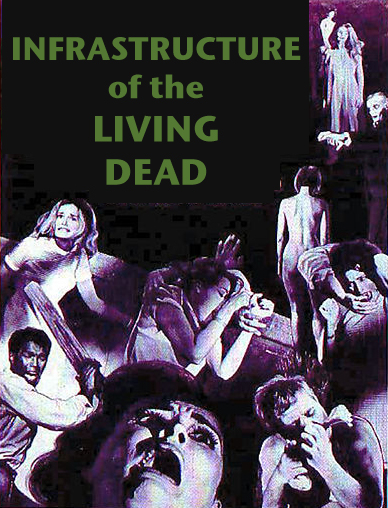
infrastructure_of_living_dead

Let’s face it. Mike Arrington’s problem with the iPhone, Om Malik’s problem with AT&T, the FCC’s problem with Apple + AT&T together, my own problems with Cox, Dish Network and Sprint, David Pogue’s problem with the whole freaking cell phone industry … all of these are a great big WAAAH! in the wilderness of industrial oblivity to what customers want. We’re in the graveyard of what Umair Haque calls the zombieconomy. We’re living in Night of the Living Dead and complaining that the zombies want to eat us alive.

What they really want is to strap us down while they bleed us for small change—tiny amounts of ARPU. They do this, for example, by forcing us to sit through “The … number … you … have … dialed … eight … zero … five … seven …” until a small ka-ching happens somewhere deep in their billing system, so you get bled whether or not you’ve left (or received) a message. David Pogue:

Is 15 seconds here and there that big a deal? Well, Verizon has 70 million customers. If each customer leaves one message and checks voicemail once a day, Verizon rakes in — are you sitting down? — $850 million a year. That’s right: $850 million, just from making us sit through those 15-second airtime-eating instructions.

It was JP Rangaswami (disclosure: I consult JP and his company, BT) who first pointed out to me that the primary competence of phone companies isn’t technical. It’s financial. They’re billing machines. That’s their core competency. And it was r0ml who pointed out, way back when he was with AT&T Wireless (before it became Cingular, and then the AT&T we all know and hate today), that phone companies arrived at the holy grail of micropayments decades ago. They don’t charge small amounts, but they know how to add them up, and round piles of microminutes into billions of dollars.

A better movie metaphor is The Matrix. We’re all wet cell batteries inside giant phone company billing systems. The machines took over a long time ago, and they’re still running the world.

Not that acting like machines does them much good in the long run. Umair Haque:

Profit through economic harm to others results in what I’ve termed “thin value.” Thin value is an economic illusion: profit that is economically meaningless, because it leaves others worse off, or, at best, no one better off. When you have to spend an extra 30 seconds for no reason, mobile operators win — but you lose time, money, and productivity. Mobile networks’ marginal profits are simply counterbalanced by your marginal losses. That marginal profit doesn’t reflect, often, the creation of authentic, meaningful value.

He adds,

The fundamental challenge for 21st Century businesses — and economies — is learning to create thick value. We’re seeing the endgame of a global economy built to create thin value: collapse. Why? Simple: thin value is a mirage — and like all mirages, it ultimately evaporates. In the 21st Century, we’ve got to reconceive value creation.

Constructive Capitalists are disrupting their rivals by creating thicker value. Thick value is sustainable, meaningful value — and a new generation of radical innovators is wielding it like a strategic superweapon.

Rick Segal thinks Mike Arrington‘s CrunchPad is one of those superweapons. Here’s what the Crunchies say will look like:

crunchpad-near-final-design

Sez Rick,

No, this probably isn’t the next Apple or Motion Computing, but here’s the secret.

Let’s assume there are just 1000 people out of all the TechCrunch people in the world that want this device.  If this device gets made and sold to 1000 happy people and the result is a manufacturing world and process which can now do these “one off” type devices, the game changes.

That’s why I want this device to get made. It begins a high profile (and positive) disruption at the point of manufacture and that can mean exciting things to you.

One way to blow up silos and walled gardens is de-verticalize industry itself. Not by making it horizontal (that’s too abstract), but by making it personal. Rick’s angle here is to go all the way to the source, and make manufacturing personal.

That’s what Rick thinks Mike & Co. are doing here. I also think the Crunchpad is compliant with what Dave says in this post here:

I’ve been through this loop many times, this is Mike’s first. The only platform that really works is a platform with no platform vendor, and that’s the Internet.

Right. The Crunchpad, as I understand it (and the Crunchies have explained it) is a Net-native device. Standards-based. Commodity parts. Full of open source stuff. The platform is the Net. The vendor is TechCrunch, but trapping users isn’t their game. They’d rather have thick value than thin.

So how do we contribute, besides paying cash for goods? By being constructive customers, rather than passive consumers. That’s what Rick is calling for here, and why we, as free and independent customers, can choose to support something that uses the Net as the platform, and is built to be user-driven.

Think about it. Is the Crunchpad crippled by any deals with a major vendor of any kind? Is it locked into any phone company’s billing and application approval systems? Is it locked into any one industry’s Business-as-Usual? No.

So who is in the best position to contribute to its continued improvement, besides the Crunchies themselves?

You. Me. Users. Customers.

We can drive this thing. Even if what Dan Frommer says is right, and Apple comes out with the world’s most beautiful pad ever, and pwns the whole category, there’s more vroom for improvement in the Crunchpad, because Apple’s device will be closed and the Crunchpad will be open. Or should be.

You listening, Mike?

Adjusting Business to a Networked World

In response to The Trillion Dollar Market, which adds a few paragraphs to Gain of Facebook (below), which responded to How Facebook Could Create a Revolution, Do Good, and Make Billions, by Bernard Lunn in ReadWriteWeb, Nate Ritter raised some questions that I’d like to answer in detail. We begin…

…one question that needs to be solved is that if both suppliers and demanders are getting value out of the transaction why is it the suppliers are always fronting the money to make the connection?

The short answer is that we’ve done it that way ever since Industry won the Industrial Revolution. The long answer is that customer choice in the prevailing industrial system is provided by sellers to buyers they “target,” “acquire,” “control,” “manage” and “lock in.” These efforts include telling captives what their choices are. We call this “marketing”.

At the level of simple customer choice, the industrial system is no different than it was when sellers operated out of carts and stalls at village crossroads. Such is the nature of straightforward retailing. But in our industrial system, sellers sit out at the last link of many value chains. Exchanging goods and services for money is a small part of that system. The final transaction is just the far end of a process that moves from source to sale through a series of complex stages in which individual customers have little if any direct say. At the end of those stages, the customer’s choice is to buy or not to buy. The customer’s job is to consume, and not to do much more than that. It works well enough, but it is also open to countless improvements in a world where everybody is approximately zero distance from everybody else. That world is the Internet. And it’s new.

The Net makes it easy—or should make it easy—for customers to advertise what they want. That is, to find and drive supply. To a very limited degree, the supply side helps this with CRM (Customer Relationship Management) systems, but those systems are all silo’d and allow very limited input from customers themselves. Put crudely, they have ways of making you talk—with a minimal set of allowable words and phrases.

If this weren’t already broken enough, many sellers’ sites and systems are also poorly designed or maintained.  Think about what we all go through when we need customer service or tech support. Why should you have to give a series of call center people your account and phone numbers, even after you’ve already punched them in, time and again? These systems are lame because they put all responsibility for maintaining a “relationship” on the sell side. They exclude most forms of customer input because they don’t want more variables than they can easily “manage”. That excludes countless clues about what the market is up to, in addition to countless sums of money left on tables they can’t see through the CRM blinders they wear.

To be clear, I’m not saying CRM is inherently bad. I am saying it’s no closer to what we need than AOL and Compuserve were to the Internet, or than mainframes were to PCs.

What VRM proposes is shifting relationship responsibility to customers as well as sellers, for the simple reason that the customer is, for many purposes, the best point of integration for his or her own data—and the best point of origination for what can be done with it.

For example, a customer’s VRM system should be able to say, globally, “I want receipts emailed to me. Here is my email address. You can do business with me if you don’t share that address with anybody, and if you don’t send me unwanted emails. Sign here (digitally) if you agree to these terms.”

Yes, that may sound scary to sellers, but guess what? The customer-control horse left the seller’s barn as soon as the Internet came along. All that precious customer data that sellers think they own is a tiny fraction of what they can gain from independent customers in relationships where both sides are open to whatever the other brings to the table. In other words, relationships in which sellers do not speak of “acquiring”, “managing”, “controlling”, “owning” or “locking in” customers as if they were slaves or livestock.

What VRM offers are better ways for sellers and buyers to relate—as equals with a wide range of options. Yes, we’ll need open and standard protocols, data types, and methodologies. Not to mention agreements that the customer (and not just the seller) asserts. We’re working on all that stuff.

Next item…

I have a feeling the culture of consumerism dissuades consumers from believing they are giving up anything (or devalues the money they are giving away for the product/service). For example, the belief that everything is free that is on the web. That’s an inherent problem that has to be solved before there will be an market that starts with the consumers. The “market’ necessitates a trade of value, and if one side is inherently told that what they want is free, then why would they give up money to trade for it?

First, what we call “consumerism” should be re-labeled “producerism”, because it’s a phenomenon driven by production. As Thorstein Veblen put it long ago (and I used to put it before discovering Veblen said it first), invention is the mother of necessity. Consumers participate, of course, but they don’t drive it. The production side does.

Of course, I’m speaking on the general scale, and of course there are definitely products and services that exist because people wanted them to. And of course they do well in charging for something because the demographic believes it’s worth the trade. But that’s not a change of the macro market. And although it’s nice and warm and fuzzy, the reality is that on a large scale people are simply being conditioned to take things for free. They don’t want to trade value for value.

When Napster came along, and suddenly everybody’s CD collection was free for the taking, “everything is free” became a mantra. Nobody, it seemed, would ever pay for music again. Why would they, when all of it is free, and one’s chances of getting caught and nailed by the RIAA and its running dogs were so small? Then Apple created the iPod and iTunes and the iTunes store, and started charging 99¢ for medium-fi music that didn’t work on more than five “authorized” devices. And people ate it up. Suddenly music had two price points: $.00 for illegal music and $.99 for legal but crippled music. How big is the latter business? Said here two years ago that Apple had already sold 2.5 billion songs. And how much has the former non-business driven the whole music industry in a new direction? Why cry about how disruptive the Internet is, and how much it devalues every old business it touches*, when it’s an expanding planet-sized environment on which countless new businesses can be built to do far more, and make money from (and for) many more people, and companies, than the old ones?

My point: it’s early. The Net is a giant zero between everything and everybody. It removes distance and reduces the costs of connection, storage, and distribution in the direction of zero.

There is still plenty of money to be made at the commodity level (just ask Nick Carr, or Amazon), but that’s one more reason why the Giant Zero is a great place to build all kinds of new businesses. And why it’s still very, very early in what Craig Burton calls the “terraforming” of the Net’s new world.

The point of my two postings (in the first sentence up top) is that there is much more money to be made in helping demand find and drive supply than in helping supply find and drive demand. And that this will be much better for the supply side than the old system, where suppliers have to do it all.

I wish it weren’t that way. Perhaps some day it won’t be. But we have to start changing the message that we’re sending out there, or even better than pushing a message, finding the areas where people are indicating they’re willing to pay for a product to be created. Harder done than said.

True. But we’ve already started. If one looks at markets (or economies) as places where parties signal each other, we’re already well underway. Nate himself did a heroic job of putting Twitter on the map as a great signaling system on the Live Web during real-world emergencies. In his case, it was the San Diego Fire. It’s conceivable that what the market learned in that experience helped save my own house during the two recent fires in Santa Barbara.

Last winter I used Twitter successfully to signal our family’s interest in a good restaurant during a layover at O’Hare. This was way less significant than what Nate did during a huge fire, but no less eye-opening for me.

Still, tweeting—microblogging—is just one early step in a direction where lies an endless variety of signals that can move from demand to supply. VRM is about creating open, standard, and simple pro forma ways of doing that.

* Tom Foremski is right when he says The Internet Devalues Everything It Touches, Anything That Can Be Digitized. But you have to read Tom’s points deeply to get the full implications. Losing the old will be painful. But there is far more value to be found in the new. For example, in fourth parties.

« Older posts Newer posts »

© 2026 ProjectVRM

Theme by Anders NorenUp ↑